
Intermittent engine trouble is the worst kind. Your boat runs fine at the dock, then starts acting up halfway through a hot afternoon run off Naples, right when you finally have time to enjoy it. Good boat engine troubleshooting is not guesswork, and mobile mechanics earn their keep by chasing the problem where it actually shows up.
What you’ll need before the diagnosis starts
Before anything gets tested, have the boat accessible, the keys ready, and enough time for a real sea trial. A quick listen at the dock usually is not enough. Intermittent problems tend to hide until the engine is hot, under load, or asked to do the exact thing that triggered the complaint last time.A short symptom log saves time
Write down what you noticed in plain language. Note whether the issue starts after a long idle, during acceleration, at a certain RPM, or after the boat sits for a week. If it happened during a 2 p.m. run out of Marco Island with a full crew and full fuel, that detail matters more than most people think.Service records, fuel receipts, and recent work matter
Recent changes often point straight at the fault. An impeller replacement, battery swap, fuel fill-up, stereo install, or electronic add-on can create a clue that cuts the diagnosis time in half. If your service notes are scattered, it helps to keep them in the same place you track your routine ownership schedule.Step 1: Recreate the problem in the same conditions that trigger it
- Run the boat where and how the symptom normally appears.
- Repeat the same RPM range, load, and idle time.
- Watch for exactly when the problem begins.
Match the time, temperature, and load
Heat changes everything. Warm Southwest Florida water, hot engine compartments, and a heavily loaded boat can expose a weak system fast. In fact, mid-80s water and 90-plus degree air put extra strain on cooling systems, which is exactly why some problems only show up in summer.Separate a true engine issue from a setup or usage pattern issue
- Check trim and tab settings.
- Confirm the bottom is clean enough to run properly.
- Look at prop condition and load.
Step 2: Start with cooling, because overheating hides in plain sight
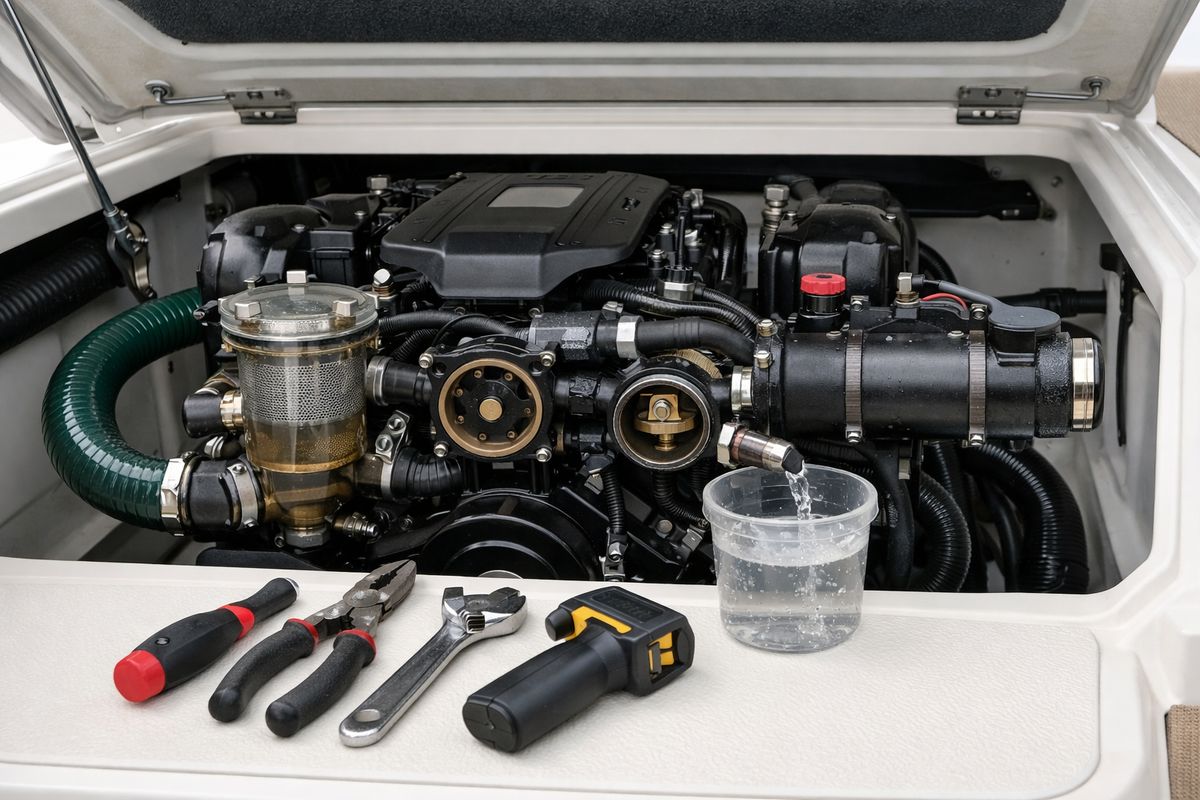
- Check water flow before digging deeper.
- Inspect the intake side and obvious restrictions.
- Move inward only after the basics look right.
Check the telltale, water flow, and intake side first
A weak stream, blocked strainer, or debris-packed intake can make the engine run fine one minute and hot the next. Some intake blockages can cut cooling efficiency by 30% to 40%. Checkpoint: if water flow is weak, you found a real lead, not a vague theory.Inspect the impeller, thermostat, and heat exchanger path
- Inspect the impeller for wear or missing vanes.
- Check thermostat operation and temperature rise.
- Inspect coolers, exchangers, and passages for restriction.
Know when a weak cooling stream is a stop-now problem
This one is simple: stop. A missing or intermittent cooling stream is not something to “keep an eye on.” Even a few minutes of poor cooling flow can damage the powerhead.
Step 3: Check fuel quality and fuel delivery under load
- Inspect fuel condition first.
- Test flow through the system.
- Compare low-load and high-load behavior.
Look for contaminated fuel, water, or ethanol-related issues
If the boat sits, fuel quality moves high on the suspect list. Water in the separator, stale fuel, or ethanol-related phase separation often causes hard starts, hesitation, and rough running after idle periods.Test filters, lines, primer bulbs, and tank venting
A mobile mechanic checks for soft hoses, pinhole air leaks, clogged filters, collapsing primer bulbs, and blocked tank vents. These are classic under-load faults. If you want a clearer picture of what can usually be handled without hauling out, this overview of what gets fixed right at the dock helps.Compare idle behavior to wide-open-throttle behavior
An engine that idles cleanly but stumbles on plane usually points to fuel delivery limits, not a basic starting issue. Checkpoint: if the problem appears only as fuel demand rises, the diagnosis narrows quickly.Step 4: Rule out electrical problems that pretend to be bigger failures
- Load-test the batteries.
- Check charging output.
- Inspect every main connection that carries current.
Load-test batteries and confirm charging voltage
A battery can show decent voltage at rest and still fail under load. Charging output matters too, especially after pumps, electronics, lights, and accessories have been running for a while.Inspect grounds, terminals, relays, and ignition connections
Loose or corroded grounds create maddening intermittent faults. Think of it like a bad phone charger angle, sometimes it works, sometimes nothing happens. If shutdowns or no-starts seem random, start here. This is also why choosing the right dockside mechanic matters, because intermittent electrical work rewards patience more than speed.Check for heat-related electrical dropouts
- Warm the engine to normal operating temperature.
- Retest suspect relays, coils, or connections.
- Watch for voltage drop as heat builds.
Step 5: Read the engine’s data and watch live sensor behavior
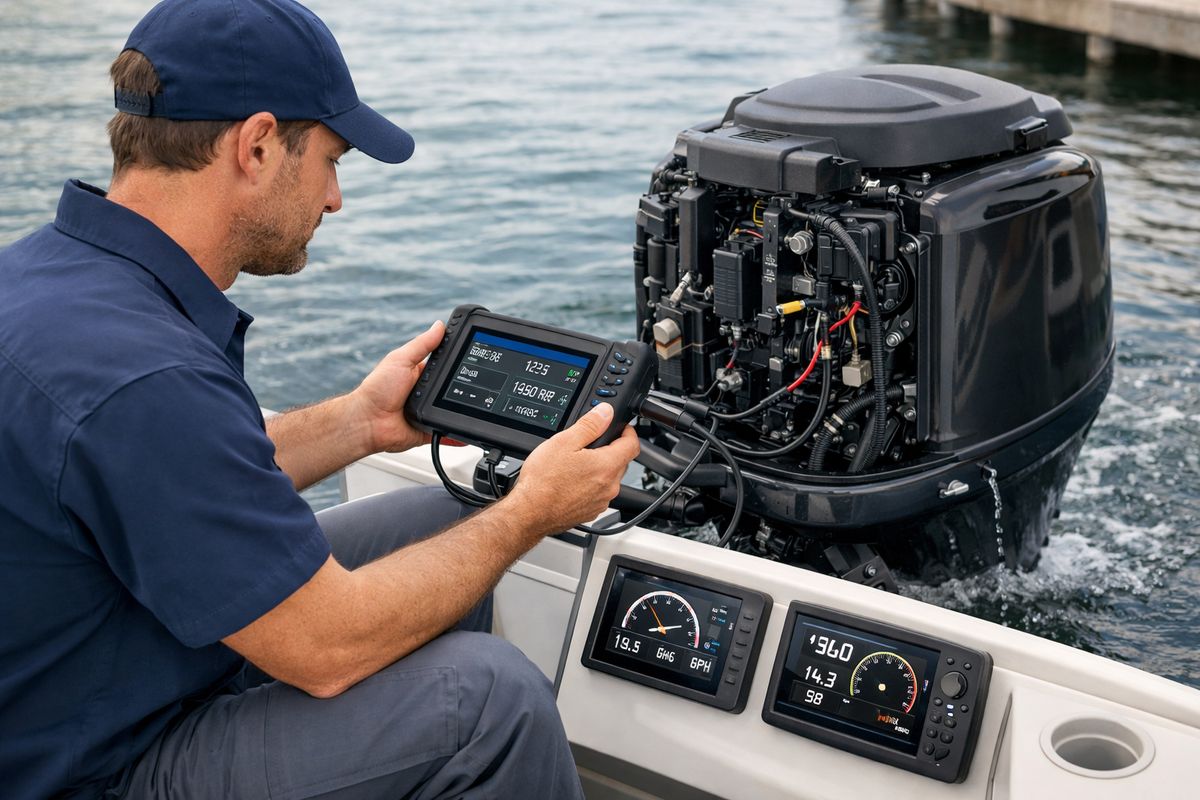
- Pull stored codes.
- Watch live data during operation.
- Compare readings to the symptom.
Pull stored fault codes and freeze-frame data
Codes can reveal overheat history, low-voltage events, and sensor glitches even when the engine is running normally during inspection. That snapshot matters because the fault may already be gone by the time anybody arrives.Watch temperature, fuel pressure, RPM, and voltage trends in real time
Trend monitoring catches the moment the problem starts. Some newer marine research shows fault models can reach 97.22% accuracy with limited samples, but on the boat, the practical version is simple: watch the numbers while the engine is misbehaving.Use sensor data to narrow down whether the issue is mechanical or electronic
If the gauge says hot but sensor data says normal, you may have a sender or display issue. If fuel pressure drops during acceleration, that is not a mystery alarm anymore.
Step 6: Check the mechanical side if the basics don’t solve it
- Test cylinder health.
- Inspect spark or injector performance.
- Look at drivetrain load.
Test compression and cylinder health
Uneven compression can cause rough idle, misfires, and power loss that seem to come and go. The symptom feels random, but the damage is not.Inspect spark, coils, and injector performance
One weak coil or dirty injector can make an engine stumble only at certain RPM ranges. Heat often makes that fault more obvious.Consider drivetrain and propulsion-related drag
A bent prop, shaft issue, or load mismatch can make the engine feel lazy when the engine itself is not the main problem. If the repair path starts getting broader, this look at when mobile service makes more sense locally gives helpful context.Step 7: Confirm the fix with a second sea trial
- Run the same route and RPM range again.
- Repeat the original load and timing if possible.
- Verify the symptom is gone.