
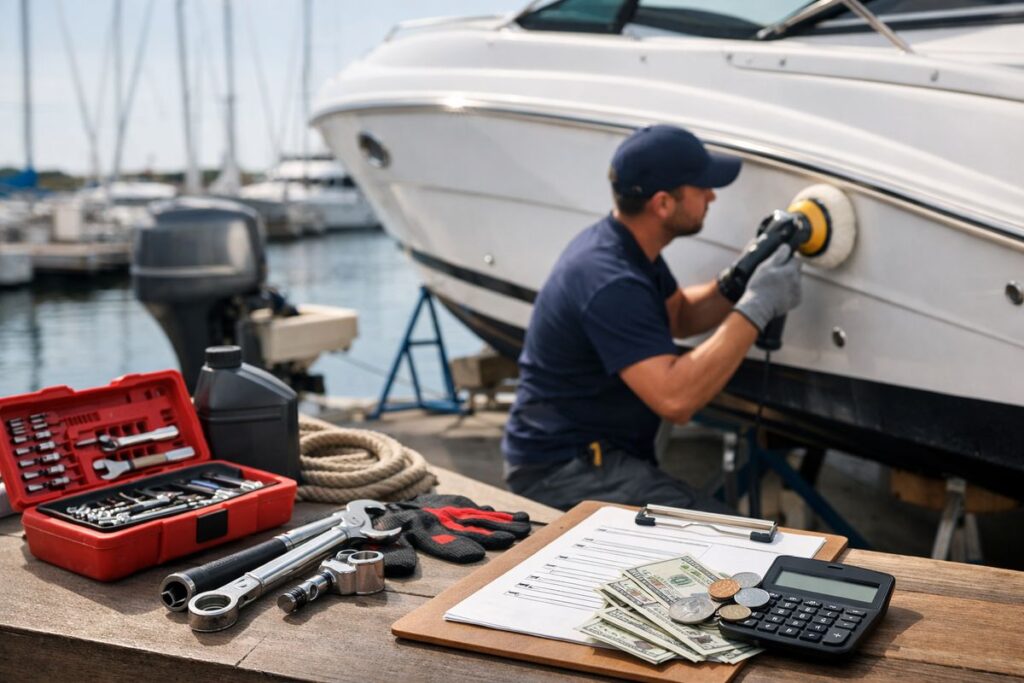
Owning a boat should mean sunset runs off Marco Island, not losing half your Saturday to a service headache before the engines even turn over. That is why mobile boat service has become such a smart fit for busy owners: it brings the work to your dock, lift, marina, or storage spot so the fix does not turn into a full-day logistics project.
What mobile boat service actually means
In plain English, mobile boat service means the technician comes to your boat instead of your boat going to the shop. If your vessel is behind your home in Bonita Springs, sitting at a marina in Naples, or stored on a rack near Marco Island, the work happens there whenever the job can be done safely on-site.
That sounds simple, but the convenience is bigger than it looks. You skip the trailering, the drop-off run, the pickup run, and the usual chain reaction of texts, gate access, keys, and timing. For owners in the 25 to 55 foot range, that matters. Moving a boat is rarely the hard part, but coordinating everything around it often is.
Here’s the thing: if your boat is supposed to make life easier, service should too. Mobile service is built for exactly that mindset.
What a mobile boat service can usually handle on-site
A lot more can be handled dockside than most owners realize. If the issue involves routine maintenance, diagnostics, minor repairs, or system troubleshooting, there is a good chance it can be done without hauling the boat away.
Routine maintenance and scheduled service
Routine service is the sweet spot for mobile work. Oil changes, filter swaps, fluid checks, impeller service, battery maintenance, tune-ups, and general system inspections are all common dockside jobs. So are pre-season checks and post-trip punch lists that tend to pile up when a boat gets used often.
This is also the easiest money you will ever spend on the boat, because scheduled maintenance prevents the expensive surprises. Salt, heat, humidity, and long idle stretches are hard on marine systems in Southwest Florida. Staying ahead of the basics beats dealing with a ruined weekend because a small service item was ignored. If you want a better feel for the rhythm of routine care, this guide to keeping up with the basics in Southwest Florida is a useful place to start.
Electrical, plumbing, and accessory fixes
Electrical and plumbing issues are another strong fit for mobile service. Battery problems, charger checks, bilge pump failures, dead lights, faulty switches, electronics glitches, freshwater pump issues, and accessory installs can often be diagnosed and fixed right where the boat sits.
The word troubleshooting gets thrown around a lot, but it simply means finding the real source of the problem before parts get swapped. That matters. A dead chartplotter may be a power issue, not a bad unit. A pump that will not run may be a switch, fuse, wiring connection, or corrosion problem. Good diagnostics save time, parts, and frustration.
Cleaning up small repairs before they become big ones
Small issues are where mobile service really earns its keep. A slow leak, a rusty hose clamp, corrosion on terminals, a hard-start complaint, an intermittent alarm, or stiff steering can all seem minor until one of them ruins a day on the water.
In Naples and Marco Island, saltwater speeds up the consequences. Corrosion does not wait politely for a better time. Neither do moisture-related electrical issues. Catching these problems early is a lot like fixing a roof leak before rainy season. Annoying now, expensive later.
What usually requires a shop, haul-out, or specialist
Mobile service can handle a lot, but not everything. Knowing where the line is saves time because you can tell right away whether a dockside visit makes sense or whether the job needs a yard, a shop, or a specialist.
Bottom work, major fiberglass, and structural repairs
Anything that requires the boat fully out of the water usually moves beyond mobile service. Bottom painting, larger fiberglass repairs, hull damage, transom issues, and structural work need a controlled setup and enough time for prep, cure, and inspection.
That does not make mobile service less useful. It just means the boat world still has jobs that belong in a yard. If the repair affects the hull’s structure or requires full access below the waterline, plan on a haul-out.
Major engine rebuilds and complex repowers
Deep internal engine work is another category that often belongs in a shop. Major rebuilds, full repowers, and serious drive repairs usually need heavy tools, shop equipment, and more time than a normal on-site visit allows.
The catch is that a mobile technician can still play an important role before that point. Diagnostics can confirm whether the issue is truly major or whether it is something more manageable. That alone can save you from jumping straight to the worst-case assumption.
Warranty, parts delays, and marina access limits
Real life has a few practical snags. Some warranty work must follow manufacturer rules, which can limit who performs the repair or where it happens. Some parts simply take time to arrive. And some marinas have access restrictions, insurance requirements, or rules about what kind of work can be done on-site.
None of that is dramatic, but it matters for scheduling. Straight answers early are worth a lot, especially if your calendar is already full.
Why mobile service makes sense for busy boat owners
Convenience gets overused as a selling point, but here it is real. Mobile service removes steps, and when your schedule is packed, fewer steps usually means the problem actually gets handled.
Less trailering, less coordination, less wasted time
A boat behind your home in Bonita Springs should not require three appointments and a traffic plan just to get an oil change or solve a battery problem. Mobile service cuts out the towing, waiting, drop-offs, and pickups that turn simple maintenance into a chore.
That matters even more for larger boats. Once a vessel reaches a certain size, every added layer of coordination starts to feel like arranging a move instead of arranging service.
Faster fixes between trips on the water
If you notice an issue on Friday, mobile service is often the fastest path back on the water for routine problems. That is the direct truth. A dockside visit can be quicker than moving the boat somewhere else, getting it checked in, and waiting for a shop opening.
This is especially useful for the in-between problems: a battery that keeps draining, an alarm that starts chirping, or an engine that feels off but still runs. Those are the exact issues that can derail a weekend if nobody looks at them quickly. And if your boat is about to sit for a while, it also helps to understand how to prep it before downtime starts, even in a warm climate.
Better fit for ongoing ownership, not just emergencies
Mobile service works best when it is not treated like a last-ditch rescue. Scheduled maintenance, pre-season checks, post-trip repairs, and recurring punch-list items all fit the model well.
That is what smoother ownership looks like. Problems get handled while they are still small, maintenance does not slip for months, and your boat stays ready without needing constant babysitting.
How to tell if your boat is a good fit for mobile service
Most boats in the 25 to 55 foot range are good candidates. The real question is not size alone. It is access, safety, and the kind of work needed.
Access, size, and where the boat is kept
If a technician can physically reach the boat and work safely, you are already in good shape. Boats at private docks, lifts, marinas, and some dry storage facilities are all common fits. The first thing to sort out is simple: can the service provider access the boat, bring tools and parts in, and work there without restrictions?
That sounds obvious, but it solves a lot upfront.
The kind of problem you want fixed
Use a quick filter. Routine maintenance, diagnostics, electrical issues, plumbing problems, battery service, alarms, minor leaks, and small mechanical repairs are usually excellent mobile jobs. Structural repairs, serious hull damage, bottom work, and major engine tear-downs usually are not.
That little mental test helps you make the call faster and with better expectations.
What to have ready before the appointment
A little prep makes the visit more productive. Have engine hours, make and model information, any recent service history, and a clear description of the problem ready to go. If an alarm appears only at idle, say that. If the issue started after a battery swap, mention it. Photos help too.
Specifics speed up diagnostics. “It’s acting weird” does not.
How to choose the right mobile boat service
Not every provider runs the same way. Some are organized and preventive. Some just react to whatever is on fire that day.
Look for clear communication and realistic scope
The best service calls start with honest expectations. You want straight answers about what can likely be done on-site, what parts may be needed, and how long the visit may take. If somebody promises to handle absolutely everything without caveats, that is a red flag.
A smart starting point is understanding what separates a dependable service provider from the rest. Clear communication is not a bonus feature. It is the foundation.
Ask about diagnostics, parts sourcing, and follow-up
Convenience is not just showing up. It is diagnosing the problem correctly, sourcing the right parts, testing the repair, and telling you what comes next. That full chain is what keeps one issue from turning into three more.
This is also where service gets easier over time. A provider that knows your boat’s history can often spot patterns faster and prevent repeat problems.
Watch for signs of organized, preventive care
Look for maintenance reminders, documented service notes, inspection findings, and recurring service plans. Busy owners do better with a system than with memory.
That is the trick. Good service is not only about fixing what broke. It is about reducing how often things break in the first place. For a useful benchmark, it helps to review how often a boat really should be serviced.
Common mistakes that make boat service harder than it needs to be
A few habits create most of the stress around boat service, and all of them are avoidable.
Waiting until the day before a trip
Southwest Florida weekends fill up fast, especially when the weather is good and a holiday is coming. Calling for service the day before a planned run creates pressure, limits parts options, and raises the odds that your plans get cut short.
Boats rarely break on a convenient schedule. That part never changes.
Calling without enough detail
Vague descriptions slow everything down. If your battery is three years old, say so. If the alarm sounds only after twenty minutes at cruise speed, mention that. If work was done recently, include it.
Specific details shorten the path to the actual fix.
Treating maintenance like an optional extra
Routine service is cheaper than preventable breakdowns. Plain and simple. Skipping it is like skipping AC maintenance in July because everything seems fine. Fine lasts right up until it does not.
Best times to book mobile boat service in Southwest Florida
Timing matters more than most owners expect, mostly because the service calendar gets crowded at very predictable moments.
Pre-season and before holiday weekends
If you know spring use is coming, book early. If Memorial Day, Fourth of July, or a long fishing weekend is on your calendar, book even earlier. Waiting until the rush starts means fewer openings and a higher chance of parts delays.
Early scheduling feels boring, but boring is exactly what you want from boat maintenance.
After heavy use or long stretches of sitting
Back-to-back use can expose issues fast. So can the opposite problem. Boats that sit in heat and salt air often develop battery problems, sticky pumps, corrosion, and fuel-related issues that show up at the worst moment.
A quick service visit after either pattern is usually money well spent.
When you want the boat ready without babysitting the process
If your boat needs attention and your schedule does too, try booking one routine mobile service visit instead of waiting for something to go wrong. That single shift often changes the whole ownership experience, because the boat starts feeling ready instead of pending.
Frequently asked questions
Is mobile boat service more expensive than taking a boat to a shop?
Not always. A mobile visit may include a travel charge, but you often save time, towing hassle, and extra coordination. For routine maintenance and smaller repairs, the overall value is often better.
Can mobile boat service work on larger center consoles and cruisers?
Yes, many boats in the 25 to 55 foot range are a strong fit, as long as the technician can access the boat safely and the job does not require a haul-out or shop equipment.
What should you send before a mobile service appointment?
Engine hours, make and model details, photos if helpful, and a clear description of the problem are the biggest time-savers. Include when the issue happens and any recent work or battery changes.
Can a mobile technician diagnose a problem even if the repair needs a shop?
Yes. That is often one of the most useful reasons to schedule a visit. Good diagnostics can confirm whether the issue is minor, urgent, or something that needs a yard or specialist.
How far in advance should you book mobile boat service in Southwest Florida?
For routine work, booking before peak boating weekends is smart. During busy seasons and holiday stretches, earlier is better because schedules tighten quickly and common parts can take longer to get.
Is mobile boat service only for emergency calls?
No. In fact, it works best for ongoing ownership. Scheduled maintenance, inspections, small repairs, and seasonal punch-list items are where mobile service usually makes the biggest difference.