There’s nothing more frustrating than loading the boat, gathering family or friends, backing down the ramp, turning the key…and hearing nothing.
Fortunately, many starting problems are caused by relatively simple issues. Before assuming the engine has suffered a major failure, take a few minutes to work through a basic troubleshooting process.
This guide covers some of the most common reasons a boat won’t start and when it’s time to call a professional.
Call now to schedule mobile boat repair service: (847) 381–0081
Before inspecting anything around the engine:
Safety always comes first.
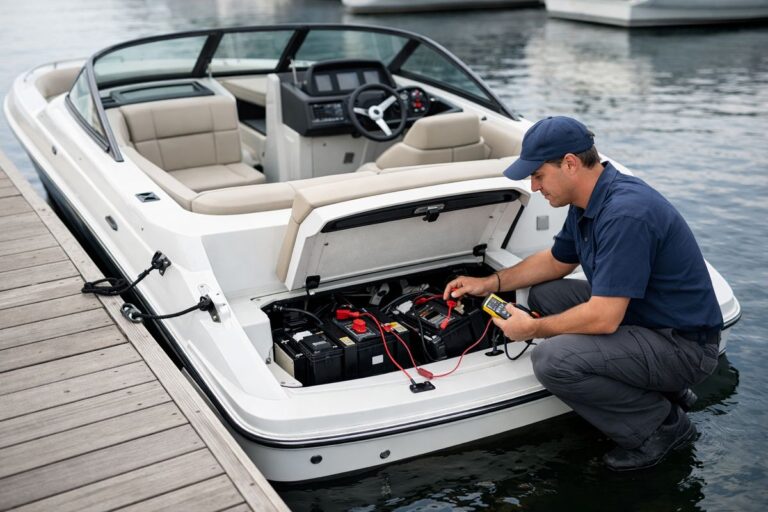
A surprising number of service calls involve nothing more than a battery issue.
Check for:
Even slightly loose connections can prevent enough power from reaching the starter.
Modern outboards use an emergency engine shutoff switch.
If the safety lanyard isn’t fully seated, the engine may crank but never start, or it may not crank at all depending on the manufacturer.
This is one of the first things to check.
Southwest Florida weather can change rapidly, especially during the summer months.
Common conditions include:
Checking the weather before every trip and keeping an eye on changing conditions while on the water can make the difference between an enjoyable outing and a stressful return to the dock.
Many boats have a neutral safety switch that prevents the engine from starting while in gear.
Move the throttle control firmly into the neutral position before trying again.
Sometimes moving the control slightly forward and back into neutral helps ensure the switch engages properly.
The sounds your boat makes can provide valuable clues.
Possible causes include:
Possible causes include:
Possible causes include:
Possible causes include:
Each symptom helps narrow down the possible cause.
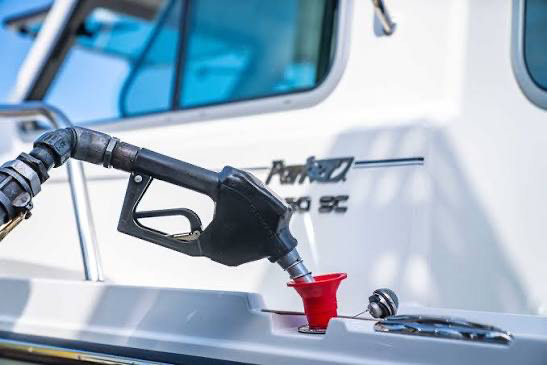
Fuel problems are another common cause of starting issues.
Verify:
If the primer bulb never firms up, there may be an air leak or another fuel system problem.
Southwest Florida’s heat and humidity can affect fuel quality, especially if a boat sits for extended periods.
Signs of fuel-related issues may include:
If contaminated fuel is suspected, continued attempts to start the engine may make the problem worse.
Fishing line wrapped around the propeller shaft can sometimes damage seals and allow water into the lower unit.
While this usually doesn’t prevent starting, it’s worth checking before heading out if you’ve recently operated in shallow water or around heavy fishing activity.
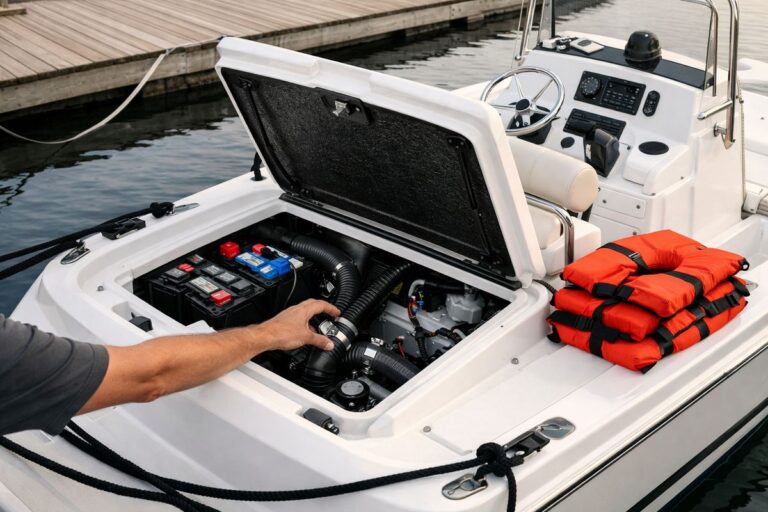
Modern marine engines constantly monitor their operating systems.
If warning lights appear or the engine is producing warning beeps, don’t ignore them.
These alerts may indicate problems involving:
Refer to your owner’s manual to understand the warning indicators for your specific engine.
Repeatedly cranking an engine that won’t start rarely solves the problem.
Instead, it may:
If the engine won’t start after a few logical checks, it’s often better to stop and determine the underlying cause.
Many starting issues can be reduced through regular maintenance.
Preventive service typically includes:
Routine maintenance helps improve reliability and reduces the chance of unexpected breakdowns.
Some problems require specialized diagnostic equipment or repairs.
Consider calling a professional if:
Accurate diagnosis can often prevent replacing parts that aren’t actually causing the problem.
Several issues can prevent starting, including a disconnected safety lanyard, fuel delivery problems, a faulty starter, ignition issues, or the engine not being fully in neutral.
No. Repeated cranking can drain the battery, overheat the starter, or flood the engine. It’s better to perform a few basic checks before trying again.
Yes. Water contamination, old gasoline, or fuel system problems can all prevent an engine from starting or running properly.
If you’ve checked the battery, safety lanyard, neutral position, and fuel supply but the engine still won’t start, professional diagnostics are usually the fastest way to identify the problem.
Whether your boat is at your home dock, marina, boat lift, or storage facility, starting problems don’t always require hauling it to a repair shop.
We provide mobile marine diagnostics and boat repair throughout Naples, Bonita Springs, Marco Island, and surrounding Southwest Florida communities, helping you get back on the water as quickly as possible.