
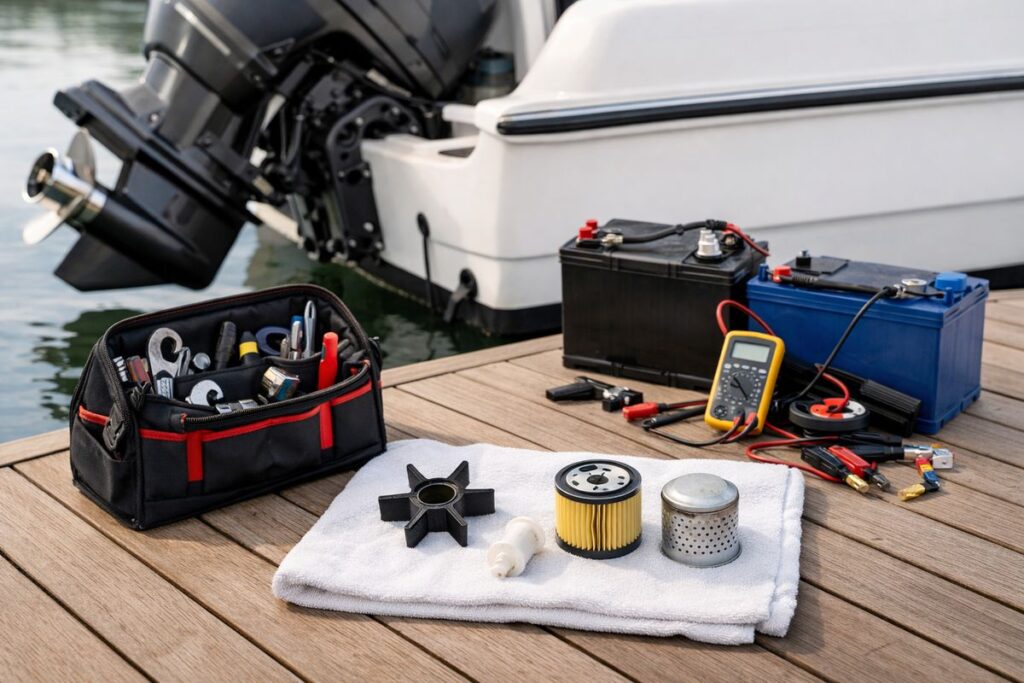
Boat maintenance in Southwest Florida starts the moment your boat is tied up, not when something breaks. In Marco Island, Naples, and Bonita Springs, salt, sun, humidity, and quick summer weather shifts keep working on your boat between every outing, so the basics matter more than most owners expect.
Why boat maintenance feels different in southwest florida
Owning a boat here feels easy on the fun side. A calm run out of Gordon Pass or an afternoon near Keewaydin makes that part obvious. The catch is that local conditions turn routine upkeep into year-round protection, and neglect gets expensive fast.
Boat maintenance is the ongoing work that keeps your vessel safe, reliable, clean, and ready to use. That includes washing away salt, servicing engines and systems on schedule, checking for corrosion or leaks, and fixing small issues before they become large repair bills.
The local conditions that age a boat faster
Southwest Florida is a tough place for boats, even beautiful ones. Saltwater settles on metal, dries into crystals, and starts corrosion anywhere it can. UV exposure fades gelcoat, dries out vinyl, and breaks down stitching. Humidity feeds mold and mildew in cabins, lockers, and under cushions. Summer storms add another layer, especially when a boat sits uncovered or unattended for days.
Frequent use matters too. This is a year-round boating area, not a short northern season, so engines, pumps, batteries, canvas, and bottom paint simply have less downtime. A boat used often stays happier in some ways, but only if the maintenance keeps pace.
Why “looks fine” Isn’t a maintenance plan
A shiny exterior can hide a lot. Corrosion often starts in battery terminals, connectors, hose clamps, and fittings long before anything looks dramatic. A little water in the bilge can turn into odor, pump strain, and mildew. Upholstery can look clean on top while moisture quietly damages seams and foam underneath.
That is why “looks fine” is not a real plan. In Florida’s climate, small issues should not be delayed because heat, salt, and moisture speed everything up.
The core boat maintenance basics every owner should stay on top of
If your boat falls in the 25 to 55 foot range, a few categories deserve regular attention: cleaning, engines, batteries, bilge, electrical, hull, and propeller. Miss one of these for long enough and convenience disappears.
Early on, focus on this rhythm:
- Clean after use
- Check engines and fluids
- Watch batteries and wiring
- Keep the bilge dry
- Inspect hull and running gear
- Log service and engine hours
Rinse, wash, and dry more than you think
Cleaning is not just about appearance. A freshwater rinse after each trip removes salt before it dries onto rails, cleats, glass, upholstery, and hardware. A proper wash helps you spot rust stains, loose sealant, chipped gelcoat, and cracked caulk while the problems are still small.
Use marine-safe soap and products meant for your surfaces. Household cleaners can damage finishes or worsen corrosion. Drying matters too, especially around metal fittings and seams, because trapped moisture lingers in this climate.
Engine and fuel system care
Engine care is where boat maintenance stops being cosmetic and becomes expensive very quickly. After saltwater use, flush with fresh water if your setup allows it. Check oil, coolant, belts, hoses, and the engine bay for leaks, fuel smell, soot, or anything new. A rough start, more smoke than usual, or extra vibration is worth attention right away.
Oil and filter intervals vary by engine and usage, but annual service is a common baseline and some engines need attention sooner. If you want a clearer sense of timing, this guide on how often to service your boat helps frame the schedule.
Your fuel system also deserves basic awareness. Fuel filters and water separators remove contamination before it reaches the engine. If those parts clog or collect water, performance suffers and reliability drops at the worst possible moment.
Battery, bilge, and electrical checks
Batteries fail quietly until they do not. Look at the terminals for white or green corrosion, make sure connections stay tight, and confirm the charger is doing its job. In humid salt air, electrical issues show up fast, especially around connectors and exposed wiring.
The bilge should stay relatively clean and dry, not oily and sour. Test the pump and float switch regularly. If water remains in the bilge, or the pump cycles more than usual, something changed and needs a closer look.
Hull, running gear, and propeller inspections
Running gear means the parts under the boat that help it move and steer: propellers, shafts, struts, rudders, and trim tabs. These parts live in the harshest environment and are easy to ignore because they stay out of sight.
Check the hull for growth, scratches, gelcoat wear, and dock rash. Look for dings in the propeller, fishing line around the shaft, and bent trim tabs. Even a small prop ding can create vibration, hurt fuel burn, and put extra stress on the drivetrain.
A simple maintenance schedule you can actually use
Busy owners do better with a rhythm than a giant spreadsheet. Think of maintenance the way you think about home care in summer: a quick reset often, a deeper check monthly, and real service annually.
After every trip
Do the five to ten minute reset. Rinse the exterior. Flush engines if applicable. Empty trash, wipe down seats and counters, and open up damp areas long enough to dry them. Check the bilge and glance at the engine space before closing up.
Also notice anything new. A warning light, unusual vibration, fresh stain near the engine hatch, or a different smell counts. Quick notes now save a lot of head-scratching later.
Monthly and seasonal checks
Once a month, slow down and look harder. Check battery condition, fluid levels, lights, pumps, safety gear, canvas, upholstery, hatch seals, and air conditioning strainers. Inspect metal fittings and terminals for corrosion. Before the summer weather pattern ramps up, make sure dock lines, fenders, covers, and storm prep items are ready.
If your boat sits unused for stretches, it needs attention anyway. This is also when it helps to review what to do before a boat sits for a while, even in Southwest Florida, because idle boats develop their own problems.
Annual service and haul-out items
At least once a year, schedule the bigger items: oil and filter changes per the manual, full engine service, zinc replacement, bottom paint evaluation, and a complete systems review. Haul-out simply means getting the boat out of the water so the hull, running gear, and underwater fittings can be inspected properly.
Annual haul-out is also the right time to look for blistering, bottom growth, shaft issues, and damage below the waterline. Skipping that inspection is like never looking under your car and hoping for the best.
The parts of your boat that Southwest Florida owners most often overlook
The obvious items get attention. The annoying little systems usually do not, until a weekend trip starts with a bad smell or a dead outlet.
Upholstery, canvas, and interior moisture
Sun and moisture attack soft goods constantly. Vinyl cracks. Canvas stitching weakens. Mildew grows in seams, under bolsters, and inside cabin corners that look fine at a glance. A cockpit can appear spotless while the closed interior quietly traps humidity all week.
Wipe surfaces down, ventilate when possible, and pay attention to hatch seals. If water gets in where it should not, the damage spreads slowly and then all at once.
Air conditioning, plumbing, and seacocks
Marine air conditioning depends on clean water flow. Strainers catch grass, shell bits, and debris before they block the system, so they need regular checks. Plumbing also needs attention: freshwater pumps, heads, hoses, and fittings can develop leaks or odor issues without much warning.
Seacocks are the valves that control water coming in and out of the boat. They should move properly and stay in good condition. Ignore them long enough and a simple maintenance item becomes a safety problem.
Safety gear, documentation, and insurance readiness
Expired flares, weak fire extinguishers, and worn life jackets are more common than most owners like to admit. Service records get overlooked too, but they matter. Clean documentation helps with resale, marina questions, insurance renewals, and survey prep.
For many insurers and marinas, a current survey matters more than owners expect. A proper survey often includes haul-out and sea trial, not just a quick look at the dock.
When to handle the basics yourself and when to hand it off
If your time is tighter than your budget, the trick is simple: keep the owner-level checks, outsource the technical and recurring work.
What you can quickly check without turning it into a weekend project
Your part can stay short. A visual walkaround, quick bilge glance, battery terminal look, wipe-down of upholstery, and mental note about any new sound or smell takes only a few minutes. That small habit catches a surprising number of problems early.
When a pro makes life easier
Engine service, electrical troubleshooting, haul-outs, bottom work, corrosion repair, survey prep, and storm prep are better handed off. The same goes for boats that sit unattended, boats used frequently, or boats expected to stay guest-ready. A service team that comes to you can remove a lot of friction if the goal is simple uptime.
Questions to ask before hiring boat maintenance help
Ask who performs routine checks, who approves repairs, and how spending thresholds work. Ask how updates are shared, whether photos are sent, who handles fueling and cleaning, and what gets documented after each visit. If your boat is guest-facing or rental-ready, ask about cleaning and safety checks specifically, because presentation and consistency matter just as much as mechanics.
Building a low-stress boat maintenance system
The best system is not complicated. It is just consistent.
Use the Owner’s manual as the baseline
Your manual sets the real intervals for your engines, generator, and systems. Follow that first, then layer local reality on top. Saltwater use in Naples and Marco Island is harder on equipment than occasional lake use somewhere else.
Keep a running maintenance log
Track service dates, engine hours, bottom paint, battery replacement, survey dates, and small issues noticed after trips. A note in your phone works. A shared spreadsheet works. The format matters less than the habit.
Start with one smart habit this week
Set up a five-minute after-trip checklist and use it after your next run through Caxambas Pass. That one habit will do more for your boat than waiting for a free weekend that never shows up.
Frequently asked questions
How often should boat maintenance be done in Southwest Florida?
Light maintenance happens after every trip, basic checks happen monthly, and deeper service usually happens annually or by engine-hour intervals. In Southwest Florida, salt, humidity, and year-round use shorten the gap between checks.
What is the most important boat maintenance task?
Engine care is usually the most expensive thing to ignore, but cleaning is a close second because it helps prevent corrosion and reveals problems early. If forced to pick one habit, rinse and inspect after every use.
Is boat cleaning really part of maintenance?
Yes. Cleaning removes salt, slows corrosion, reduces mildew, and helps you spot damage before it gets worse. On a Florida boat, cleaning is preventive maintenance wearing a nicer outfit.
When should your boat be hauled out?
At least annually is a good baseline for many boats in this area, especially for bottom inspection, antifouling, zincs, and running gear checks. Boats with heavy use or performance issues may need attention sooner.
Should you manage boat maintenance yourself or hire help?
If you enjoy the process and stay consistent, owner-level checks are worth doing. If your schedule is packed, your boat sits often, or you want dependable readiness, handing off the recurring work is usually the smarter move.