A good boat maintenance schedule is not about becoming a part-time mechanic. It is about making sure your Saturday starts with lines off the dock in Marco Island, not with a dead battery, a wet bilge, or a phone call canceling lunch plans. If you want boating to feel easy, a simple schedule beats last-minute fixes every time.
In plain English, a boat maintenance schedule is a repeatable routine for checking, cleaning, and servicing your boat before small issues turn into breakdowns. For a busy owner, the right schedule follows a few clear time buckets: before every outing, after use or weekly, monthly, quarterly, and annually.

Why a Boat Maintenance Schedule Saves Your Weekend
You know the scene. Bright morning, cooler packed, guests arriving, somebody is already asking how long until you cast off. Then the engine cranks slowly, the chartplotter flashes an alert, or the shore power connection looks scorched. That is why maintenance matters. A schedule protects your time more than your tools. It cuts the mental load of ownership by turning random problems into predictable checks, and structured timeframes are exactly what make upkeep manageable. It also protects value. A documented service history can raise resale by as much as 20%, which is a nice bonus, but honestly the real win is simpler: fewer ruined weekends.Start With a Simple Maintenance Rhythm
Salt, sun, humidity, and warm water in Naples, Bonita Springs, and Marco Island speed up wear. Corrosion starts faster, mildew settles in faster, and marine growth builds faster. So your schedule needs consistency more than complexity. Think of it like brushing your teeth versus booking a root canal. Short, repeated care is cheaper, easier, and far less annoying.The 5 Time Buckets That Keep Things Manageable
The basic rhythm is simple. Before every outing, you do a fast readiness check. Weekly, or after each use, you clean and inspect the parts salt attacks first. Monthly, you check systems. Quarterly, you look deeper at wear, corrosion, and performance. Annually, you haul out and reset the boat properly. That cadence works because each layer is short on its own. You are not trying to do everything every weekend. You are stacking small protections before problems pile up. If your boat sits for stretches between outings, monthly operational runs matter even more. Systems that sit idle too long tend to sulk. Pumps stick, seals dry out, batteries discharge, and generators become temperamental.Use the Owner’s Manual as Your Non-Negotiable Baseline
Your owner’s manual comes first, always. Engine, generator, outdrive, Seakeeper, air conditioning, and electronics all have manufacturer intervals for fluids, impellers, filters, belts, inspections, and software. Your boat maintenance schedule should sit on top of those intervals, not replace them. That matters for reliability, but it also matters for warranty coverage and service records. If a manufacturer says the 100-hour service is due, that is not a suggestion. It is the baseline. Everything else in this guide helps you stay ahead between those required services.Before Every Outing: The 10-Minute Checks That Prevent Most Headaches
This is the highest-value part of the whole schedule. A quick pre-trip pass catches the stuff most likely to ruin the day. One source notes that 10-minute checks before departure prevent a huge share of common failures, and that sounds about right. You do not need a flashlight clenched between your teeth for an hour. You need a calm, repeatable walk-through.Engine, Bilge, and Battery Quick Check
Start with the engine space. Check oil level. Look for anything obvious, fuel sheen, coolant residue, loose clamps, fresh drips, cracked belts, or hoses that look swollen. If something looks new, pay attention. Then check the bilge, the bottom area of the boat where water collects. A little clean water may be normal. Murky water, oily residue, or a rising level is not. Test the bilge pump and float switch if your setup allows it. Finally, look at the batteries. Terminals should be tight and clean, not furry with corrosion. If your voltage looks low or the starter sounds lazy, do not assume it will be fine once you get going. For intermittent starting problems, it helps to understand how hidden engine faults get tracked down before a no-start becomes your whole weekend.Fuel, Lights, and Basic Safety Gear
Confirm fuel level, but do not stop there. Sniff for fuel. Look for wet spots around filters, hoses, and fittings. Water in fuel and small leaks love to show up at exactly the wrong moment. Then check navigation lights, horn, and VHF radio. Safety gear counts as maintenance too. Make sure life jackets are where they should be, the throwable device is accessible, and fire extinguishers are charged and in date. Nobody enjoys checking this stuff, but nobody enjoys needing it and not having it either.Dockside Walkaround Before You Cast Off
Walk the perimeter before you release lines. Look at dock lines, fenders, cleats, rails, windshield, hatches, and anything mounted on deck. A loose latch or cracked fitting can turn into an expensive problem after a few bouncy miles offshore. Finish with a weather glance. Not a full forecasting hobby. Just enough to avoid pretending a building afternoon storm is somebody else’s issue.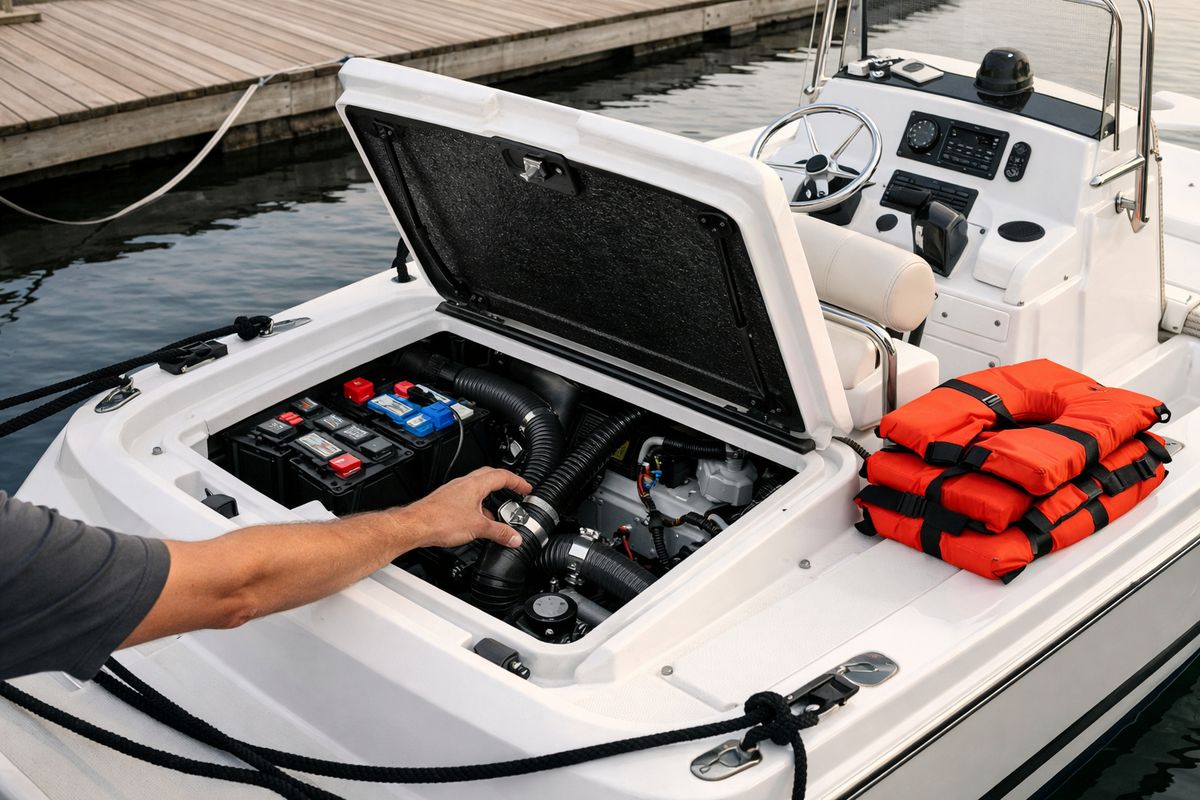
Weekly or After-Use Tasks: Keep Salt, Sun, and Grime From Winning
In Southwest Florida, weekly maintenance usually means after-use maintenance. Salt does not wait politely until next month. Leave it sitting and it keeps grinding away, like sand stuck in a zipper.Rinse, Wash, and Dry the Right Areas
Rinse the exterior thoroughly with fresh water. Flush the engines if your setup calls for it. Wash canvas, wipe glass, clean upholstery, and pay extra attention to stainless, hinges, latches, and other hardware where salt likes to crust up. Drying matters more than most owners think. Wet corners turn into mildew farms fast, especially under cushions, around enclosure panels, and in shaded cockpit areas.Check the Hull, Prop, and Running Gear
Give the hull a visual scan for fresh scuffs, chips, or cracks. If the boat stays in the water, keep an eye on slime and growth at the waterline. Warm Gulf water is generous with marine growth, and performance drops quicker than most people expect. Look at the propeller and running gear, meaning the underwater parts that help the boat move and steer. Watch for dings, bent edges, fishing line around shafts or props, and issues around trim tabs. If your boat lives in Naples or Marco and stays wet year-round, this is also where dockside fixes often make sense, because catching small underwater or mechanical issues early is much easier than dealing with a disabled boat later.Look Over Lines, Fenders, and Shore Power
Dock lines should not be frayed, flattened, or chafed through in one spot. Fenders should hold air and stay positioned where they actually protect the hull. Shore power cords should look clean, not burnt, cracked, or heat-marked around the plugs. That last part deserves attention. Small shore power issues can become expensive electrical problems fast, especially in storm season.Monthly Maintenance: The Small System Checks That Stop Big Repairs
Monthly checks are where surface care turns into real prevention. This is the part busy owners skip most often, and it is exactly where expensive surprises begin.Batteries, Connections, and Electrical Basics
Open the battery compartment and inspect terminals, cable ends, and hold-downs. Clean corrosion, tighten loose connections, and confirm the charger is working as expected. A lot of no-start problems come down to simple electrical neglect, not dramatic engine failure. Scan the breaker panel. Test electronics you actually rely on, chartplotter, VHF, pumps, windlass, and alarms. Moisture and vibration are hard on marine wiring, so little faults have a way of growing quietly.Fluids, Filters, and Cooling System Checks
Recheck engine oil, coolant if applicable, and gear lube levels. Inspect visible hoses and clamps. Drain or inspect fuel-water separators, the filters that remove water before it reaches the engine. If your engine cooling path gets restricted by a worn impeller or blocked intake, overheating can get expensive quickly. A monthly systems pass has been tied to lower breakdown rates, which makes sense. Boats usually whisper before they scream.Pumps, Plumbing, and Air Conditioning
Test bilge pumps and float switches again. Run the freshwater pump, heads, and sinks. Look for drips around fittings and hose runs. Check seacocks, the valves that control water moving in and out of the hull, to make sure they move freely and show no obvious corrosion. Run your marine A/C too. Idle systems can develop clogged strainers, weak flow, and musty smells fast in this climate. Monthly exercise keeps components from sitting still too long.Update Charts, Software, and Monitoring Alerts
This part gets missed because it does not look like maintenance. It is still maintenance. Update chartplotters, navigation software, and connected engine systems when needed. Review battery monitoring apps, engine alerts, and remote monitoring notifications. Modern engine monitoring systems help spot temperature, voltage, and fuel issues early, which is exactly what you want if you are not hovering around the boat all week.Quarterly Maintenance: The “Catch It Early” Service Window
Every few months, go deeper. This is the bridge between owner upkeep and professional service.Inspect Corrosion, Anodes, and Metal Hardware
Check sacrificial anodes, the softer metal pieces designed to corrode first so expensive underwater hardware does not. If anodes are heavily wasted, you may have bonding or stray-current issues worth investigating. Inspect stainless hardware, rails, fasteners, and metal fittings for pitting, rust staining, or looseness. Corrosion never gets cheaper by waiting.Steering, Controls, and Trim Systems
Pay attention to steering feel. If the wheel feels stiff, the throttle drags, or shifting gets vague, treat it as an early warning. Hydraulic systems may need fluid checks, linkages may need inspection, and trim tabs should cycle smoothly. Autopilot basics belong here too. If it wanders, alarms, or acts erratic, that is worth fixing before a longer run.Fuel Quality and Generator Readiness
Boats that sit between weekends are especially prone to fuel trouble. Condensation, contamination, and stale fuel can sneak up on you. Watch for rough starts, hesitation, or filter debris. Run the generator under load regularly. A generator that only gets used when guests are aboard has terrible timing. If service history is spotty, it helps to know what local repair costs usually look like before a small issue turns into a bigger project.Annual Service and Haul-Out: The Reset That Protects Value
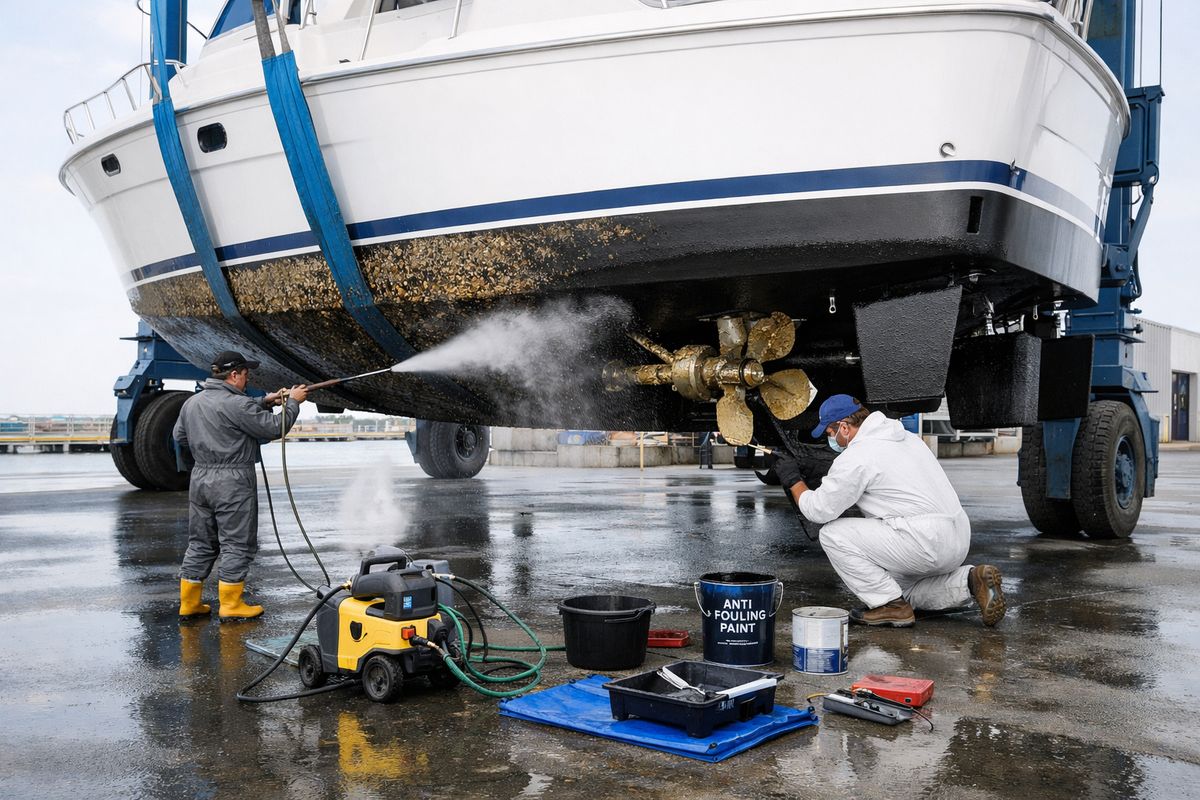
Annual service is not where you cut corners on a 25- to 55-foot saltwater boat. Haul-out, meaning taking the boat out of the water for inspection and service, gives access to the parts you cannot properly evaluate in the slip.Bottom Service, Growth Removal, and Antifouling
Pressure wash the hull, inspect for blisters, check through-hulls, and inspect underwater gear. Reapply bottom paint as needed. In warm coastal water, annual haul-out and antifouling are among the most important scheduled services because growth steals speed, efficiency, and handling surprisingly fast.Engine, Generator, and Drive Service
Do the annual engine and generator service on time: oil and filters, impellers, belts, spark plugs or diesel service items, and manufacturer interval work for outdrives or shaft systems. Good service here protects reliability and paperwork. It also keeps you from losing a holiday weekend to something that should have been handled in March.Safety, Compliance, and Paperwork Review
Review registration, insurance requirements, documentation, flares, extinguishers, and battery dates for any EPIRB or PLB you carry. Keep records organized. ABYC standards are a useful framework for marine repair and maintenance, and boats aligned with ABYC standards have been associated with better safety outcomes. Good records also make surveys, claims, and resale much easier. No mystery. No guessing.