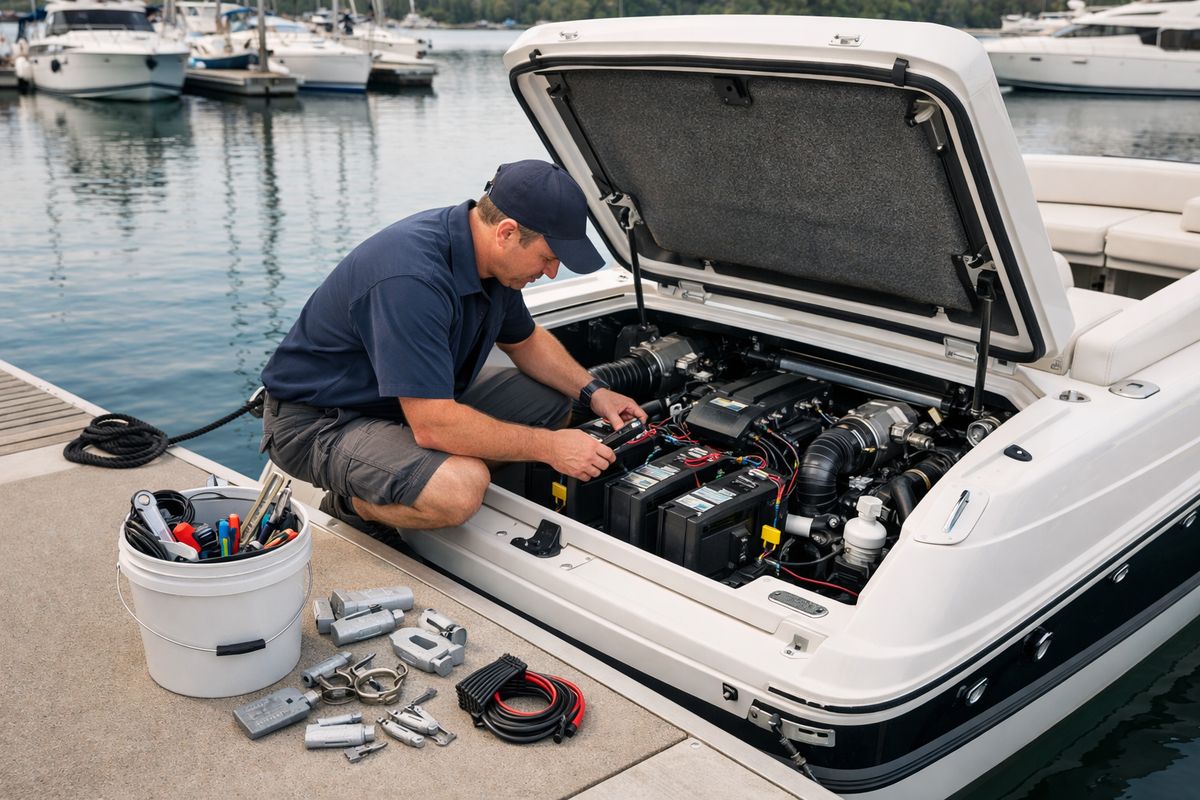
Boat repair services are exactly what they sound like: the work needed to keep your boat running, safe, and ready to use, and in many cases, that work can happen right where your boat sits. If you keep a boat in Marco Island, Naples, or Bonita Springs, mobile service is often the fastest way to get a real problem fixed without losing half your week to yard logistics.

What Boat Repair Services a Mobile Mechanic Can Handle
A mobile marine mechanic comes to your dock, lift, marina, yacht club, or driveway instead of requiring you to bring the boat into a shop. That matters more than it sounds. When your engine won’t start on a Saturday morning or your batteries die at the slip, the hard part usually is not the repair itself. It is the hassle of towing, hauling, scheduling, and waiting. For busy owners, convenience is not a luxury add-on. It is the whole point. Demand for marine service is high, and 14-day turnaround times are common in the broader repair market, which is exactly why dockside service has become such a practical option.Why mobile service works so well for everyday boat problems
A surprising number of boat issues are inspection-friendly. In plain English, that means a mechanic can see the system, test it, diagnose the fault, and often fix it without moving the boat. A dead battery at a Naples dock, a bilge pump that stopped cycling, or an outboard that cranks but will not fire before a run out of Caxambas Pass are all common examples. Here’s the thing: most problems start small and local. A weak connection, a bad impeller, contaminated fuel, a charger issue, a corroded terminal. Those are exactly the kinds of jobs mobile service handles well.Engine and Outboard Repairs You Can Usually Get Done On-Site
This is the category most owners care about first, and for good reason. If the engine is down, the boat is down. Mobile mechanics can usually handle tune-ups, no-start conditions, overheating, rough running, stalling, oil and filter changes, spark plug swaps, belt and hose replacement, fuel delivery problems, impeller service, and scheduled maintenance for outboards and many inboards and sterndrives. A lot of this work is less dramatic than people expect. The fix may be as simple as a failing battery, clogged filter, fouled plug, or collapsed fuel line. But if you ignore it, the cheap fix becomes an expensive one fast.Diagnostics for hard starts, alarms, smoke, and loss of power
Diagnostics means finding the cause, not just reacting to the symptom. A mobile mechanic uses scan tools, voltage testing, fuel checks, cooling system inspection, and hands-on troubleshooting to figure out why an engine is acting up. That distinction matters. An engine alarm does not automatically mean a major failure. It could be low voltage, a blocked intake, a sensor issue, or a cooling problem. If your boat has an intermittent issue that only shows up under certain conditions, it helps to understand how tracking down on-and-off engine problems usually works before the visit.Routine service that prevents bigger repairs
Preventative service is always cheaper than getting stranded. That is not a sales line, it is just true. Oil changes, lower unit service, fuel filter changes, corrosion checks, cooling system inspections, and scheduled engine service keep small wear items from turning into breakdowns. Poor fuel maintenance alone is tied to a huge share of engine trouble, and 40% of engine failures are attributed to it. If your boat gets used hard one month and then sits in the Florida heat for two weeks, regular service is not optional. It is part of ownership.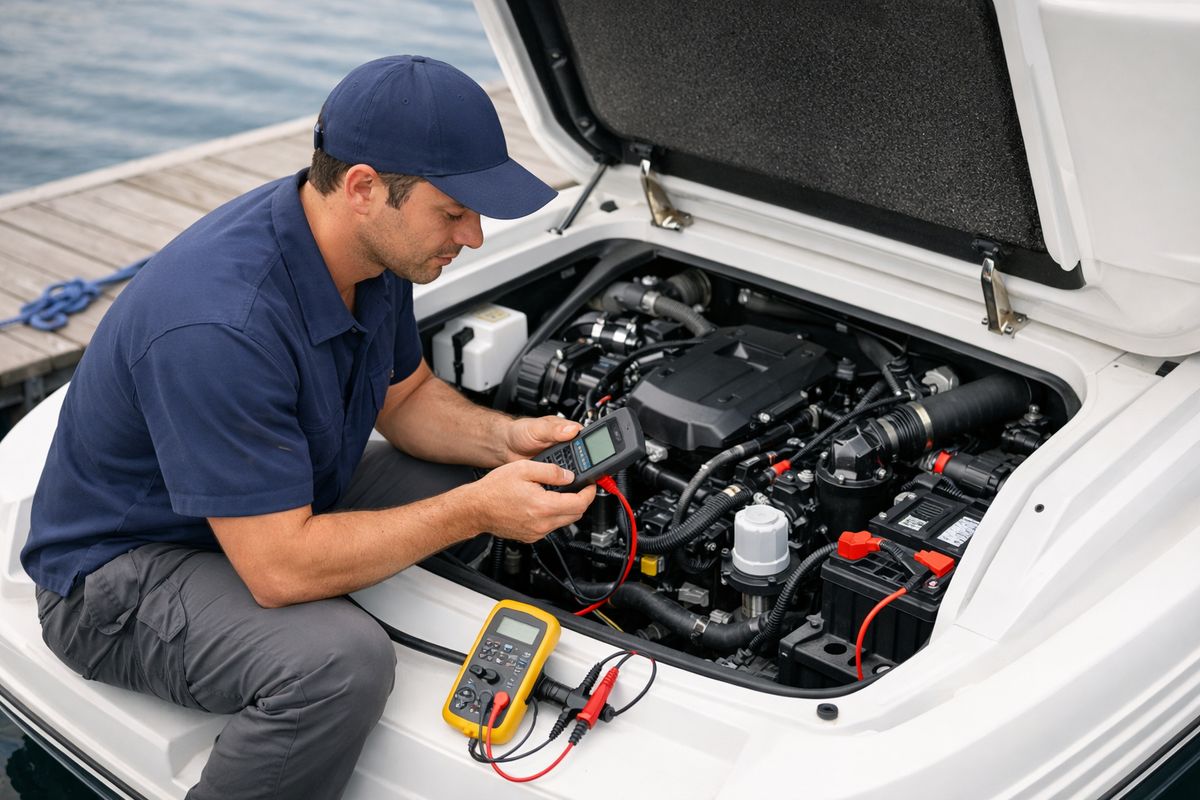
Electrical, Battery, and Electronics Problems Mobile Mechanics Often Fix
A lot of “mystery” boat problems are actually electrical problems wearing a disguise. The engine will not crank. The stereo cuts out. The bilge pump is dead. The chartplotter flickers. The battery charger is on, but nothing seems to be charging. Those are classic mobile repair calls. Battery replacement, charger testing, switch panel troubleshooting, fuse and breaker problems, corroded wire ends, lighting repairs, pump failures, and accessory wiring are often handled dockside. Electrical work is also a big part of the industry, with 22% of repair revenue tied to electrical upgrades in one industry estimate.What “marine electrical” usually means in real life
It sounds technical, but most marine electrical work comes down to the systems your boat depends on every trip: batteries, chargers, pumps, wiring, breakers, lights, and electronics. Salt air and humidity are brutal on all of it, especially at terminals and connection points. Think of it like a home with a very bad environment problem. Everything vibrates, gets wet, and sits in salty air. So a tiny wiring issue can create a surprisingly annoying failure.Electronics installs and replacements
Mobile techs can often install or replace chartplotters, GPS units, VHF radios, depth finders, stereo components, and transducers at the dock. The catch is that this works best when the job is a clean swap or a modest add-on, not a full custom helm redesign. If you want a better sense of what local service usually covers, this guide to when dockside fixes make sense gives a useful comparison.Maintenance and Seasonal Boat Repair Services That Save Time
Boat repair services are not only for breakdowns. In fact, the smartest use of mobile service is often knocking out maintenance before something fails. Battery checks, steering inspection, zinc replacement, fuel system checks, pre-season recommissioning, and storm-prep service all fit that category. That matters in Southwest Florida, where boating is not packed into one short season. Your boat is exposed nearly year-round, which means wear does not politely wait until spring.Pre-trip inspections and punch-list fixes
This is one of the highest-value service calls you can book. A mobile mechanic can handle several small issues in one stop before guests arrive or before a weekend run. Sticky switches, a weak washdown pump, loose clamps, fading batteries, a hard-to-open hatch latch, a nav light that stopped working, all of that adds up. If your boat use is mostly weekend and lifestyle-based, having a simple upkeep plan for busy owners usually saves more time than any emergency call ever will.Corrosion and saltwater wear in Southwest Florida
Marco Island, Naples, and Bonita Springs are rough on boats in very specific ways. Heat cooks batteries. Humidity creeps into connectors. Salt attacks wiring ends, pump housings, cooling passages, clamps, and terminals. A boat can look spotless at the dock and still hide corrosion in the engine room. Honestly, that is one of the biggest traps in local ownership.