
Quick Answer
Before every boating season, check the engine (oil, gear lube, water pump impeller, belts, and hoses), the fuel system, batteries and wiring, the bilge pump, the hull and running gear, steering, and all of your required safety gear. Then confirm your registration is current and take a short sea trial before your first real trip.
If you are wondering what should be checked before every boating season, the short answer is everything that keeps you afloat, running, and legal. Months of sitting in Southwest Florida heat and salt air are hard on a boat, even one that looks perfect from the dock. A careful walk-through now is what saves you from a dead battery at the ramp or an overheating engine halfway to Keewaydin.
Call Now to Schedule a Pre-Season Boat Check: (847) 381-0081
Around here, boating never fully stops, but most owners still have a quiet stretch. Maybe you head north for the summer, maybe the boat sits on a lift through hurricane season, or maybe life just gets busy. Whatever the reason, downtime is when problems build without anyone noticing. Fuel breaks down, batteries drain, impellers take a set, and salt creeps into every connection. A pre-season boat inspection catches those issues while they are still cheap and easy to fix, instead of after they have left you drifting in the Gulf with a cooler full of melting ice.
Start with the parts that live below the waterline, because that is where trouble likes to hide.
Turn the wheel lock to lock and feel for binding or stiffness. On hydraulic steering, check the fluid level and look for leaks at the helm pump and cylinder. Run the trim and tilt through its full range, test the trim tabs, and make sure the throttle and shift move smoothly without slop.
Check tire pressure and look for dry rot on the sidewalls, inspect the wheel bearings, test the lights, and look over the winch strap, safety chains, and bunks. Saltwater launches are rough on trailers, so a freshwater rinse after every use goes a long way.
The engine gets most of the attention, and for good reason. Whether you run outboards, a sterndrive, or inboards, these are the basics to cover:
Ethanol-blended fuel does not age well. If the boat sat with a partial tank, moisture can collect and cause rough running or a no-start.
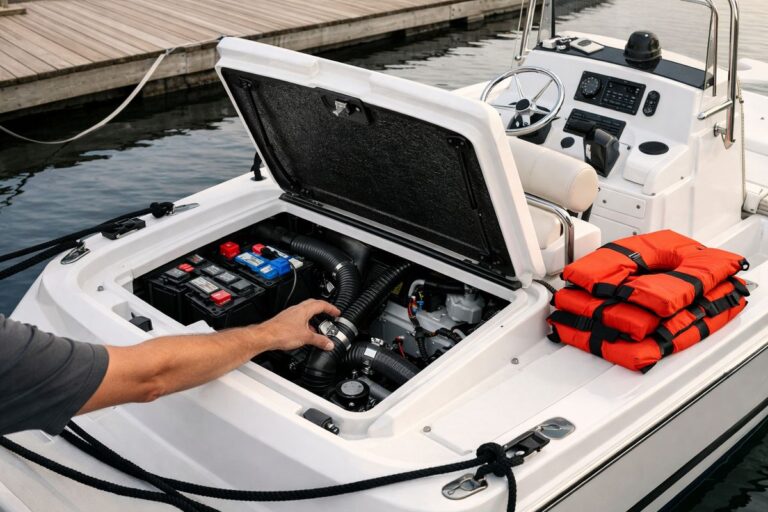
A surprising number of calls about a boat that will not start come down to something electrical. Give this part of the checklist real attention.
Safety gear is easy to forget because you hope you never need it. Before the season starts, count it, check it, and replace anything that is expired or worn out.
Once everything checks out at the dock, take a short, easy run close to home. Let the engine warm up, watch the gauges, confirm a strong telltale stream, and try a few different speeds. Listen for new noises, test the steering and trim under load, and check the bilge when you get back. If something feels off, you would much rather find it ten minutes from the dock than ten miles out.
Some owners enjoy working through this list themselves. Others would rather hand it off. Our boat maintenance service covers the full pre-season checklist, and our mobile marine mechanic can do the work right at your dock or lift. If you are away for months at a time, vessel management keeps your boat checked between seasons so it is ready when you are.
For a typical center console or small cruiser, a thorough do-it-yourself check takes a few hours, plus time for a sea trial. A professional inspection usually takes a half day or less, depending on the size of the boat and how many systems it has. Marco Boat Works bills system checks hourly, and current rates are on our pricing page.
Give yourself two to four weeks before your first planned trip. That leaves time to order parts or schedule a haul-out if the inspection turns something up. In Southwest Florida, many seasonal owners book in early fall, before the winter crowd arrives.
You can, but that is not really a check. An engine can start fine and still have a worn impeller, a weak battery, or water in the fuel. Running it without confirming cooling water flow is also how impellers get destroyed.
Expired safety gear and the bilge pump float switch. Both look fine sitting there, and nobody finds out otherwise until the moment they are needed.
If it was not changed before the boat sat, yes. Used oil holds acids and moisture that are hard on internal engine parts. Otherwise, follow the hour-based schedule in your engine manual.
Heat, UV, and warm saltwater speed everything up. Growth builds faster on the bottom, anodes wear quicker, and corrosion spreads on wiring and hardware. Our article on why boats break more often in Southwest Florida explains the details. Hurricane season runs June through November, so it is also a good time to review your boat storm preparation plan.
“Ben was On Time. He did exactly what he said. The detail turned out great. He will be getting future business from me and all my boat owning neighbors and friends. Highly Recommend!”
“Marco Boatworks has been a game-changer for us. Ben and his crew maintain our 55-foot boat, and the level of care and attention they provide is truly outstanding. The boat looks absolutely perfect at all times — clean, polished, and always ready to go. Ben is professional, reliable, and clearly takes pride in his work. His team is just as impressive — hardworking, detail-oriented, and respectful. We couldn’t be happier with the service and highly recommend Marco Boatworks to anyone looking for top-tier vessel management.”
Want your boat ready before your first trip? Call (847) 381-0081 or send us your boat's make, length, and where it is docked, and we will schedule a pre-season check.
We hired Ben at Marco BoatWorks for our monthly boat watch and boat detailing. He is very knowledgeable, reliable, and always does a great job! Our boat has never looked so good. I highly recommend! Thank you Ben!!