
If you’ve ever looked at a boat invoice and thought, “That can’t be the whole story,” you’re right. Boat maintenance cost is rarely just one service ticket, and for boats in the 25 to 55 foot range around Marco Island, Naples, and Bonita Springs, the real number usually includes a lot more than most owners expect.
What “boat maintenance cost” really means
When you hear “boat maintenance cost,” it’s easy to picture oil changes and maybe a washdown. That’s only part of it. In real life, the number usually includes routine service, repairs, haul-outs, bottom cleaning and paint, detailing, storage-related wear, battery issues, corrosion control, and all the little fixes that show up at the worst time.
Here’s the thing: the purchase price is the easy part. Ownership is where the real spending starts. A boat sitting behind a home off a Naples canal looks effortless on a sunny afternoon, but keeping it ready for a calm Saturday run out of Marco Island takes steady attention and steady money.
That doesn’t mean ownership is a bad deal. It means you need to budget for the boat you actually own, not the one from the sales brochure.
The real annual cost range for a 25- to 55-Foot boat
For a recreational boat in this size range, annual maintenance alone may land around 1% to 3% of the boat’s value if the vessel is newer, well-kept, and professionally serviced on schedule. But that’s maintenance in the narrow sense. Once you widen the lens to full ownership, a lot of owners fall back on the 10% rule because it captures the real pain better.
In plain English, if your boat is worth $300,000, pure maintenance might be far below $30,000 in a good year. But once storage, insurance, fuel, bottom work, detailing, and surprise repairs get folded in, the all-in annual spend can start creeping toward that territory fast.
That broader ownership picture is backed up by ongoing boating spending, not just purchase activity. Boats cost money long after closing day.
The 10% rule: useful, but not the whole story
The 10% rule says you should expect to spend about 10% of the boat’s purchase price each year on ownership. It’s a useful shortcut because it forces realism. If a boat feels affordable only when you ignore annual costs, it probably isn’t.
The catch is that this rule blends categories together. Maintenance, repairs, insurance, fuel, dockage, and other recurring expenses tend to get mashed into one rough number. So it’s directionally helpful, but not precise.
A newer boat with fewer hours, good records, and regular service may come in well under 10% on maintenance alone. An older boat with deferred work, tired canvas, aging electronics, neglected bottom paint, and twin engines can blow past it without much drama.
Sample cost ranges by boat size and setup
For a simple 25 to 30 foot boat with one outboard or a fairly straightforward setup, annual upkeep and ownership costs might feel manageable, though “manageable” still often means several thousand dollars a year before you blink. A 30 to 40 foot boat usually steps into a different bracket because systems multiply. Add a generator, air conditioning, more pumps, more batteries, and more surface area to clean, and your budget rises with it.
By the time you get into a 40 to 55 foot cruiser or yacht-style setup, costs climb fast. Twin engines, in-water storage, larger haul-outs, and more service intervals create a budget that needs room to breathe. For many South Florida owners, a 30-foot boat can easily run around $1,000 to $1,500 per month in real-world ownership expenses, depending on condition and use.
The point isn’t to chase an exact quote from a generic article. It’s to sanity-check your expectations before small line items turn into a yearly surprise.
The biggest cost drivers that change your maintenance budget
A boat’s annual cost isn’t random. A few factors do most of the damage, or save you money if you choose well.
Size, age, and complexity
A basic 28-footer is cheaper to maintain than a 45-foot cruiser for the same reason a simple condo is easier to maintain than a waterfront house with a pool, elevator, and guest suite. More stuff means more upkeep.
“Systems” is just boat shorthand for the equipment that needs care: engines, generator, air conditioning, pumps, electronics, batteries, plumbing, and charging systems. Every added system creates another service schedule, another possible failure point, and another invoice.
Age matters too. A well-built older boat can still be great, but older hoses, pumps, seals, wiring, and electronics don’t care how nice the boat looks at the dock.
How you store the boat changes everything
Storage has a huge effect on maintenance cost, especially on the Gulf Coast. Wet slips are convenient, but boats kept in the water year-round usually need more hull cleaning, bottom paint, zinc replacement, and corrosion attention. That’s just life in saltwater.
Dry rack storage often runs about $10 to $40 per foot per month, while wet slips commonly land around $15 to $50 per foot per month. And wet storage often brings higher maintenance on top of the storage bill. Boats kept out of the water usually avoid some long-term hull wear and can save money over time through reduced long-term maintenance.
If you keep your boat in the water, it helps to follow a solid pre-season prep list before heavy use ramps up. It’s a simple way to catch the obvious stuff before it becomes expensive stuff.
Saltwater use, frequency, and deferred maintenance
Southwest Florida boating is hard to beat. It’s also hard on equipment. Salt, humidity, heat, and year-round use create a steady grind on metal, wiring, pumps, and finishes.
Frequent use can actually help some systems because boats like to run. But skipped service is where costs get ugly. Putting off impellers, fluids, zincs, or inspections is a lot like skipping oil changes in your car for two years and acting surprised when one small issue turns into a much bigger mess.
If your boat lives on the coast full-time, it helps to understand what changes in a saltwater environment. That part isn’t glamorous, but it absolutely changes your budget.
What You’re actually paying for each year
This is where the number gets real. “Maintenance” sounds neat and tidy until you break it apart.
Routine service and seasonal work
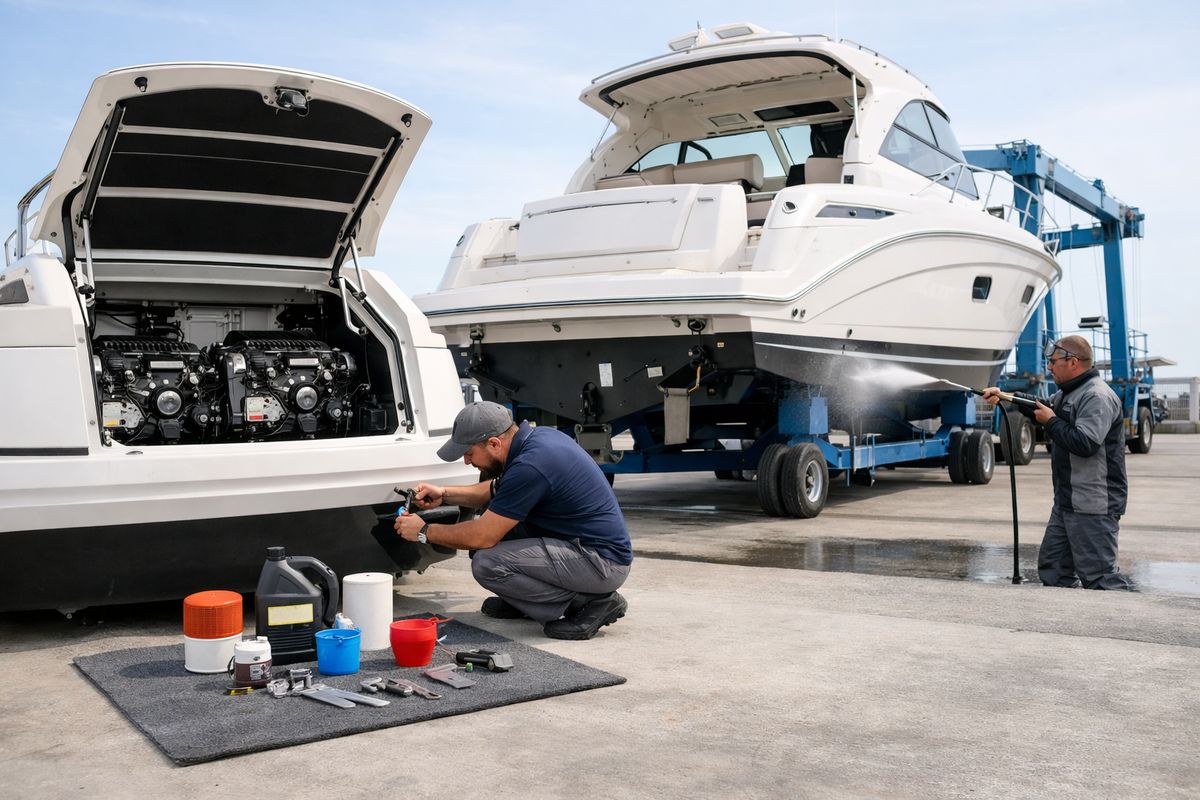
Routine service usually includes oil and filter changes, fuel filters, lower unit or transmission fluids, impellers, zincs, battery testing or replacement, air conditioning checks, and scheduled engine service based on hours or time. Add washdowns, compounding, waxing, and detailing, and the annual total starts to build.
If your boat sits for a stretch, commissioning may come into play. That just means getting the boat ready to run properly again after downtime. Nothing mysterious, just another line item.
A simple don’t-miss service routine helps keep these recurring items from slipping through the cracks.
Bottom care, haul-outs, and repairs
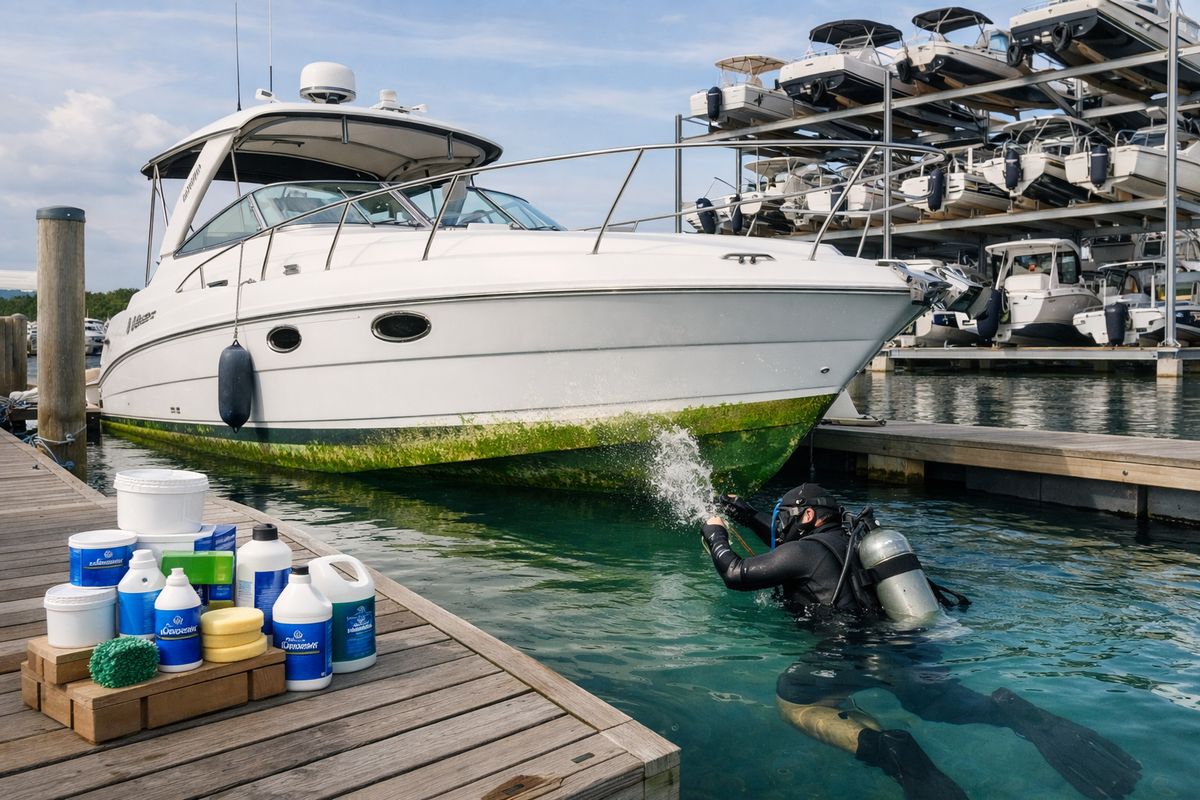
If your boat stays in the water, bottom care is one of the biggest recurring costs. Hull growth slows performance, burns more fuel, and creates more drag than most owners realize. Antifouling paint, diver cleanings, haul-outs, running gear checks, and corrosion fixes are not optional for long.
A lot of in-water boats will see roughly $2,000 to $5,000 per year for haul-outs and bottom work, depending on size and condition. Ignore that category long enough and repair costs go from annoying to painful in a hurry.
Insurance, storage, fuel, and the costs people forget
Insurance often runs about 1% to 2% of boat value per year. Fuel is even less predictable. If your use is light, fuel may stay in the background. If your weekends involve longer runs, it can get expensive fast, often anywhere from a couple thousand dollars a year to well beyond that.
Then come the costs people forget: registration, safety gear replacements, canvas repairs, electronics updates, towing coverage, dockside service charges, cleaning supplies, and the occasional battery or pump that quits with no warning. Add storage, and you start to see why recurring ownership costs catch so many owners off guard.
Common budget mistakes boat owners make
Most budget mistakes aren’t about being careless. They come from treating boat ownership like a purchase instead of an ongoing operation.
Underestimating in-water costs
A lot of owners budget for engine service and forget the rest of in-water life: bottom cleaning, diver visits, zincs, corrosion control, and extra wear from salt exposure. If your boat stays wet year-round, this category deserves its own line in the budget, not a vague mental note.
Buying for the dream, not the actual use
This one gets expensive fast. If your typical outing is a local cruise, maybe lunch, maybe a sunset ride, a much larger boat can saddle you with systems, dockage, and fuel burn you rarely need.
More boat isn’t automatically better. Sometimes it’s just more to service.
Waiting until something breaks
Reactive ownership costs more. Period. Preventive service may feel annoying because you’re paying to avoid a problem you can’t see yet. But machinery failure is a real issue on the water, and equipment problems matter for both safety and repair costs.
How to keep boat maintenance costs manageable without managing everything yourself
If your time is tight, the goal isn’t to become your own service manager. The goal is fewer surprises and more usable weekends.
Use a simple annual budget framework
Start with boat value, then pressure-test it against the 10% rule. After that, break your budget into five buckets: routine maintenance, storage, insurance, fuel, and a repair reserve.
That last bucket matters more than most owners want to admit. Something will come up. Build in the buffer now so it doesn’t wreck the season later.
Consider professional management or full-service care
Professional management makes sense when you don’t want another moving part in your life. Scheduling service, coordinating vendors, tracking maintenance intervals, checking on the boat after weather, and making sure washdowns actually happen takes time. Handing that off is really about buying back convenience.
That’s especially true if your boat is part-time local, your schedule is packed, or you simply don’t want to spend Friday afternoon chasing a service window.
One smart move to try before your next season
Pull your last 12 months of boat expenses into one list. Then sort every charge into maintenance, storage, fuel, insurance, and surprise repairs.
That one exercise clears up the real cost fast. It also shows you exactly what should stay on your plate and what’s worth outsourcing.
Frequently asked questions
How much should you budget each year for boat maintenance cost?
A practical starting point is 10% of the boat’s value for overall annual ownership, then separating maintenance from storage, fuel, and insurance. For maintenance alone, a well-kept boat may land closer to 1% to 3% of value, but older or more complex boats can run higher.
Is the 10% rule accurate for every boat?
No. It’s a shortcut, not a quote. It works best as a reality check for total annual ownership, not as a precise maintenance estimate.
Why do boats kept in the water cost more to maintain?
Constant water exposure increases hull growth, corrosion, zinc wear, and the need for bottom cleaning and paint. In-water boats usually need more attention and more frequent service than boats stored dry.
What maintenance items get overlooked most often?
Bottom care, battery replacement, zincs, detailing, canvas wear, electronics updates, and small plumbing or pump repairs get missed all the time. None of those look huge alone, but together they add up quickly.
Can professional boat management actually save money?
Yes, especially if it prevents deferred maintenance, missed service intervals, and repeat repairs. Even when management adds a fee, it can reduce bigger surprise costs and save a lot of time.