
Saltwater boat maintenance is the extra care your boat needs once it lives near the coast and runs in the Gulf, not just the usual rinse-and-forget routine. Come back from a clean, easy run near Keewaydin or out through Marco Pass, and your boat can look perfectly fine while salt is already drying into fittings, cooling passages, and wiring.
What saltwater boat maintenance actually means on the coast
In plain English, saltwater boat maintenance means staying ahead of what salt, humidity, sun, and warm water do to your boat every single day. That includes more frequent washing, engine flushing, corrosion control, bottom cleaning, and system checks than a freshwater boat usually needs.
Here’s the thing: coastal maintenance is not just regular boat care done a little more often. It’s a different rhythm. Salt gets into places you don’t see, then sits there working. On a 25 to 55 foot boat, small neglect turns into expensive repair work fast because there are simply more systems, more metal, and more finish to protect.
Why saltwater changes the game faster than most owners expect
Salt speeds up corrosion. That’s the big one. But it also leaves residue in cooling systems, dulls gelcoat and glass, stains metal, and helps moisture hang around where it shouldn’t.
Think of salt like beach sand in a car after one trip. You can vacuum the obvious stuff, but grains still hide in seams and corners. On a boat, the hidden leftovers are harsher, and they don’t just look messy. They shorten the life of hardware, wiring, pumps, clamps, and engine parts.
The main areas saltwater hits first
Saltwater doesn’t damage every part of your boat at the same speed. A few areas always take the first hit, and once you know where they are, the extra work makes a lot more sense.
Hull, gelcoat, and the stuff below the waterline
Above the waterline, salt leaves a film that dries on gelcoat, glass, vinyl, and metal. That film attracts grime, causes spotting, and slowly dulls the finish if it isn’t washed off.
Below the waterline, the pace picks up. Warm Gulf water encourages algae, slime, barnacles, and scum line buildup much faster than many owners expect. A hull that looks clean from the dock can already be growing a layer underneath that hurts fuel economy, changes handling, and puts more strain on engines. If you want a useful baseline for recurring upkeep, it helps to follow a solid ownership routine instead of waiting until the bottom looks rough.
Engines, cooling passages, and fuel system basics
Your engines are where skipped maintenance gets expensive in a hurry. Saltwater boats rely on cooling systems that pull in raw water, meaning water taken directly from outside the boat, to carry heat away from engine components. When salt dries inside those passages or sits in related parts, buildup starts forming where you can’t see it.
That’s why flushing matters after use. Outboards, inboards, and stern drives all handle cooling a bit differently, but the idea stays the same: get salt out before it hardens into deposits. Ignore that long enough and you’re not just dealing with dirt. You’re dealing with overheating risk, shortened component life, and repair bills that make routine service look cheap.
Metal hardware, fittings, and corrosion points
Rails, cleats, hinges, props, trim tabs, fasteners, thru-hulls, and swim ladder hardware all live in a rough environment. Salt air alone can start leaving rust stains and pitting, even if your boat doesn’t spend every day in the water.
Then there’s galvanic corrosion, which sounds technical but isn’t hard to understand. Put different metals together in water, add a little electricity, and one starts getting eaten away to protect the other. That’s why zincs, or sacrificial anodes, exist. They’re supposed to wear out. Your expensive hardware isn’t.
Batteries, wiring, and electronics
Salt air and moisture creep into electrical connections slowly, then all at once. Terminals grow green buildup, connectors corrode, and grounds get weak. The annoying part is that your electronics can look perfect at the helm while the connections behind the panel are already turning into a future problem.
This is how mystery issues start. A pump works sometimes. A battery switch gets hot. A chartplotter flickers. Usually, the problem didn’t begin that morning. It started months earlier with moisture, salt residue, or corrosion in a tucked-away connection.
What changes in your routine after every trip
For coastal boats, the after-trip routine matters more than most owners want to admit. Not because every outing wrecks your boat, but because consistency is what keeps ownership easy.
Rinse vs. full wash: what’s the difference?
A freshwater rinse is the quick version. It knocks off loose salt, cools hot surfaces, and buys you time. If you just did a short trip in fair weather, a rinse may be enough for that day.
A full wash is different. Soap, soft brush or mitt, proper drying, and a wipe-down of metal and glass remove the residue a rinse leaves behind. That deeper clean protects finishes, helps prevent spotting, and makes it easier to catch little problems while they’re still little. The catch is that a boat can look clean after a rinse and still have salt sitting on it.
Flush the engines and rinse the right systems
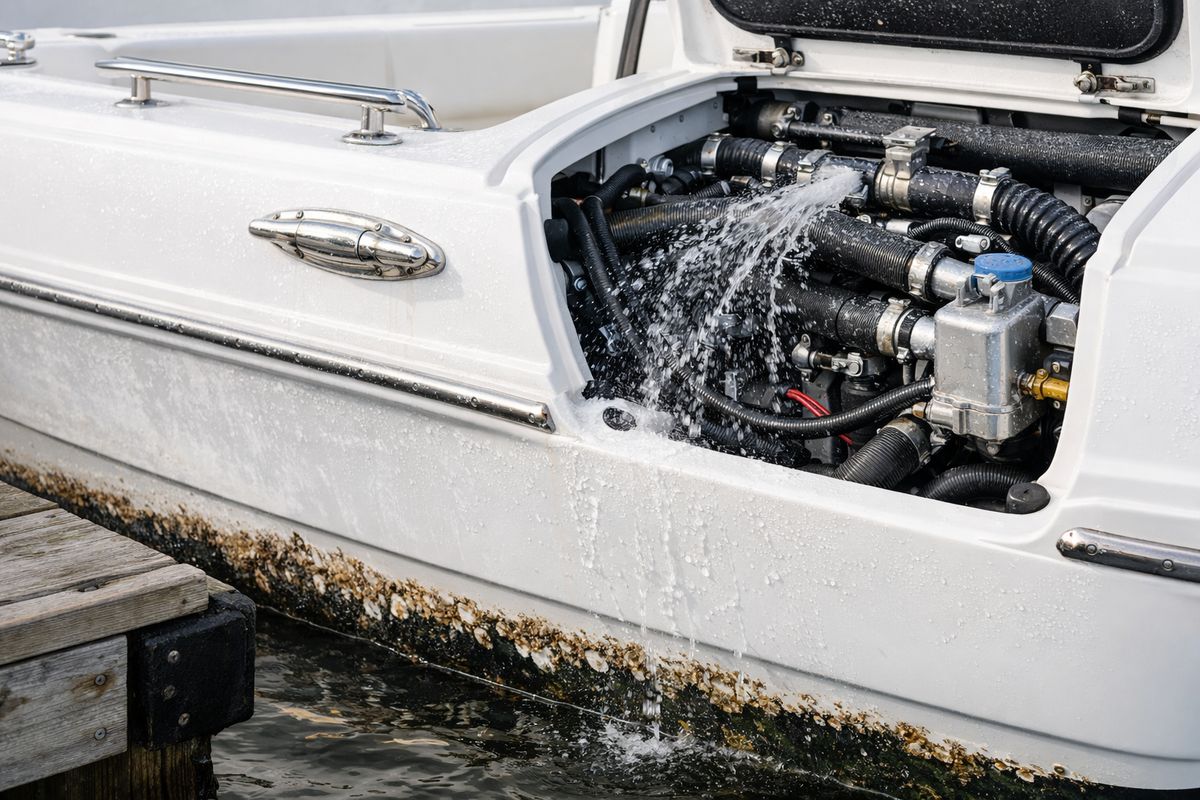
Engine flushing is non-negotiable for saltwater use. On many outboards, that means using the built-in flush port or the correct flushing setup after the boat is out of the water. On inboards or stern drives, the process can be more involved, which is exactly why it gets skipped when life gets busy.
Other systems may need rinsing too, depending on the boat: anchors and chain, fish boxes, livewells, cockpit drains, and deck hardware around salt spray zones. Before departure, it also helps to pair maintenance habits with a smart pre-departure check, because small issues are easier to spot at the dock than halfway offshore.
Drying, wiping down metal, and catching problems early
Rinsing without drying leaves minerals and water spots behind. Wiping down metal, glass, and key painted or gelcoat surfaces helps stop residue from baking in under the Southwest Florida sun.
This is also when problems show up. Tea-colored rust stains under screws, crusty hose clamps, damp storage compartments, loose fittings, and cloudy enclosure panels are all early warnings. Catching those right away is the whole trick.
The ongoing saltwater maintenance schedule
Saltwater care gets much easier once it becomes a rhythm instead of a guessing game. You don’t need to obsess over the boat. You just need the right tasks happening at the right intervals.
After every outing
After each trip, handle the basics: rinse exposed surfaces, flush the engines, wash when needed, dry key areas, empty or air out wet compartments, and do a quick walkaround. This is the bare minimum that keeps salt from stacking up one trip at a time.
Monthly and mid-season checks
Monthly and mid-season checks are where expensive surprises get prevented. Zincs wear down quietly. Bottom growth builds slowly. Battery terminals corrode a little at a time. Bilges get funky, pumps get unreliable, hose clamps loosen, and filters start collecting debris.
These are the items that drift from fine to annoying to expensive without much warning. If you’re trying to budget the reality of ownership, it helps to understand what ongoing care usually adds up to before small issues start piling on.
Seasonal service and haul-out items
Seasonal service usually includes bottom cleaning or bottom paint planning, full detailing, wax or protective coatings, cooling system service, and inspections that are easiest when the boat is out of the water. That’s when you get a good look at running gear, thru-hulls, tabs, and hull condition.
In Southwest Florida, “seasonal” doesn’t always mean storing the boat away for months. Plenty of boats in Marco Island, Naples, and Bonita Springs run year-round, which means there’s less true downtime for catching up. A practical reference point is a boating season checklist that keeps routine care from turning into a memory test.
Storage, docking, and local conditions that make maintenance harder
Where your boat sits between trips changes almost everything about maintenance. Same boat, same owner, different storage, very different workload.
Lift-kept, wet-slipped, or trailered: why it matters
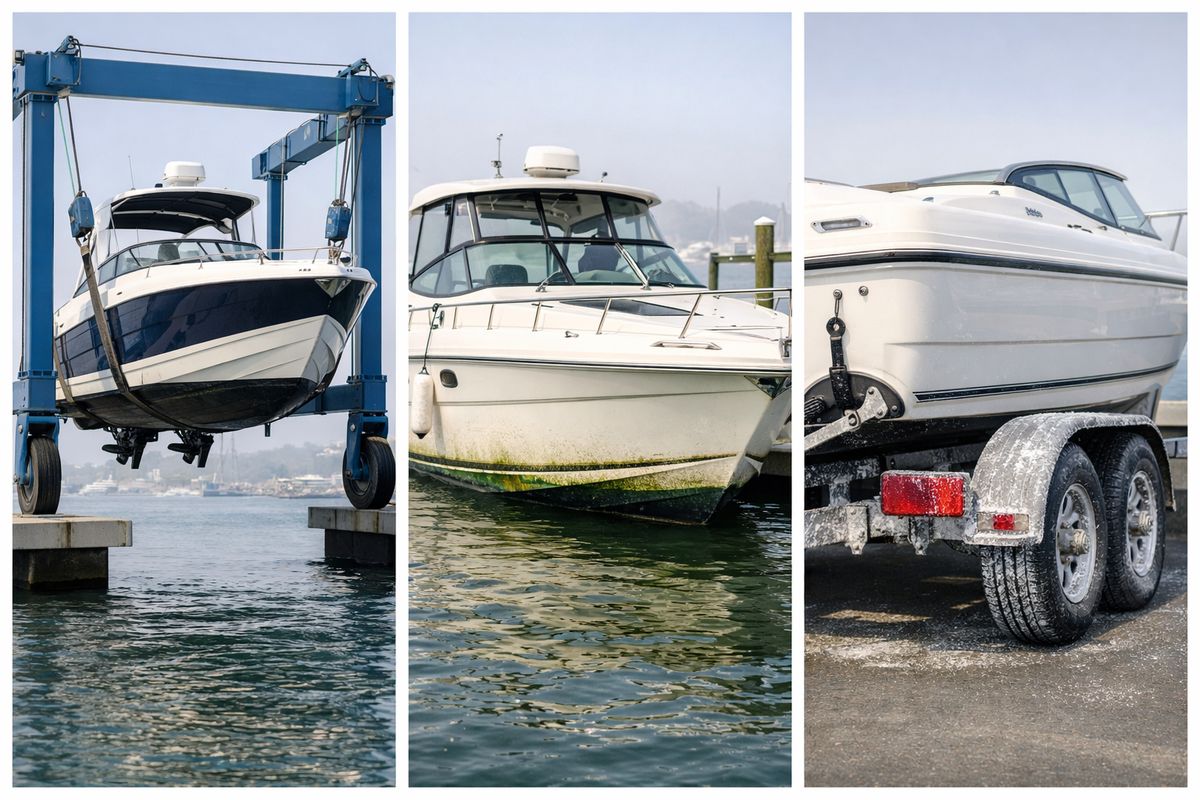
A lift-kept boat avoids constant bottom growth exposure, but still gets hit by salt air, sun, wind-driven spray, and mechanical wear from regular use. A wet-slipped boat deals with ongoing marine growth, more corrosion exposure, and faster scum line buildup. A trailered boat stays out of the water, but trailers bring their own salt-related problems, especially at brakes, hubs, lights, and fasteners.
A boat sitting in a slip off Naples Bay simply won’t have the same maintenance profile as one stored high and dry. Bottom cleaning frequency, zinc wear, hull staining, and wash intervals all change with storage.
Sun, heat, humidity, and afternoon storms
Salt is only part of the story on the Gulf Coast. UV breaks down gelcoat, vinyl, canvas, seals, and plastics. Heat bakes in water spots and oxidation. Humidity feeds mildew in cabins, compartments, and upholstery. Afternoon storms add wind-driven rain and surprise water intrusion.
That’s why a boat can be mechanically fine and still look tired fast. Enclosures haze up, stitching weakens, lockers stay damp, and mildew starts where airflow is poor. The environment keeps pressing, even when the boat is parked.
Common mistakes that cost more than people realize
Most saltwater damage doesn’t start with one huge mistake. It starts with ordinary shortcuts repeated often enough.
“A quick rinse is enough every time”
A rinse helps, no question. But it doesn’t remove all residue, it doesn’t protect finishes by itself, and it doesn’t replace inspection. Salt can stay on hardware, in seams, around clamps, and behind fixtures long after the obvious spray is gone.
“If it looks clean, it’s fine”
That’s the trap. Hidden corrosion, clogged cooling passages, weak electrical connections, and growth below the waterline often start long before the boat looks neglected. Clean-looking boats can still have very expensive issues brewing underneath.
“Freshwater rules work the same on the coast”
They don’t. Inland habits usually leave too much time between washes, flushes, zinc checks, and bottom attention. On the coast, especially with larger boats kept near the water full-time, maintenance intervals tighten up. That’s just reality.
When saltwater boat maintenance becomes a time problem
For most owners in this area, the real issue isn’t understanding maintenance. It’s keeping up with it consistently when your weekends are supposed to be fun.
Signs your boat needs a set schedule, not occasional attention
Recurring water spots, stained metal, missed flushes, surprise battery problems, dirty bilges, mildew smell, and growth under the hull all point to the same thing: the routine is slipping. Not because you don’t care, just because ad hoc care stops working once the boat gets used regularly in saltwater.
What to hand off so your boat stays ready to use
The easiest jobs to delegate are the repetitive ones that matter most: washdowns, engine flushes, monthly checks, corrosion watch, bottom service coordination, and pre-trip or post-trip readiness. That setup works because it protects your time and keeps the boat from drifting into “mostly fine” condition.
And honestly, that’s the whole goal. Fewer chore days, more days when your boat is clean, charged, flushed, and ready to leave the dock.
Frequently asked questions
How often should you wash a saltwater boat?
A freshwater rinse after every outing is a good baseline, but regular full washes matter too. If your boat stays near the coast full-time, plan on more than just rinsing so salt film, stains, and residue don’t build up.
Do you really need to flush engines after every saltwater trip?
Yes. Salt left in cooling passages starts causing buildup right away. Flushing after use is one of the simplest ways to avoid expensive engine and cooling system problems.
Is a lift-kept boat low maintenance?
Lower maintenance than a wet-slipped boat, usually. But not low maintenance. Salt air, sun, humidity, and spray still affect metal, wiring, finishes, canvas, and mechanical systems.
What parts of the boat corrode first in saltwater?
Metal fittings, hose clamps, battery terminals, electrical connections, trim tabs, props, and thru-hull areas usually show problems early. Hidden connections behind panels can corrode before anything obvious shows at the helm.
How fast does bottom growth happen in Southwest Florida?
Faster than many owners expect. Warm Gulf water encourages slime, algae, and barnacles quickly, especially on boats kept in the water. Even a short delay in cleaning can affect performance and fuel use.
What’s The simplest rule to remember?
If salt touched it, rinse it. If salt can hide in it, inspect it. That one rule will keep your maintenance habits pointed in the right direction.