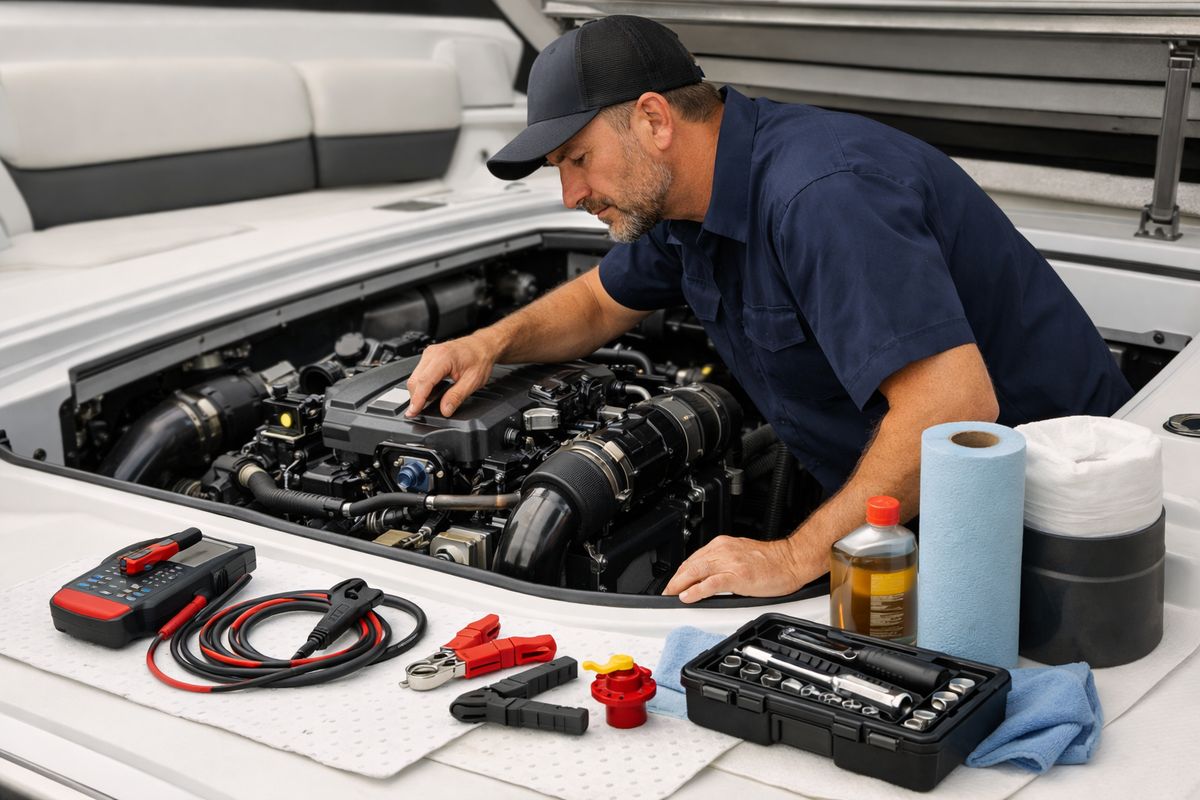
A mobile marine mechanic can save your weekend or wreck it. When your boat is sitting at the dock in Naples or Marco Island, the weather is perfect, and one stubborn repair is the only thing keeping you off the water, convenience feels priceless, but mobile marine mechanic insurance is the detail that separates a smart service call from a very expensive mess.

Why this hire can save you time or create a very expensive headache
Picture a Friday afternoon at your slip, iced drinks already in the cooler, guests texting arrival times, and your port engine deciding that now is the moment to throw a warning alarm. A mobile mechanic sounds like the obvious answer. No haul-out, no scheduling ballet with a yard, no dragging your calendar around somebody else’s shop hours. That convenience is real. It is also where owners get sloppy. The wrong mobile mechanic can turn one “quick fix” into scratched gelcoat, a fried module, a fuel spill at the dock, or a fight over whose insurance should pay. That is not drama. That is how small service jobs become large invoices. The good news is that you do not need to turn this into a research project. You just need to avoid five common mistakes, and the biggest one sits right in plain sight: assuming insurance is just the mechanic’s business problem.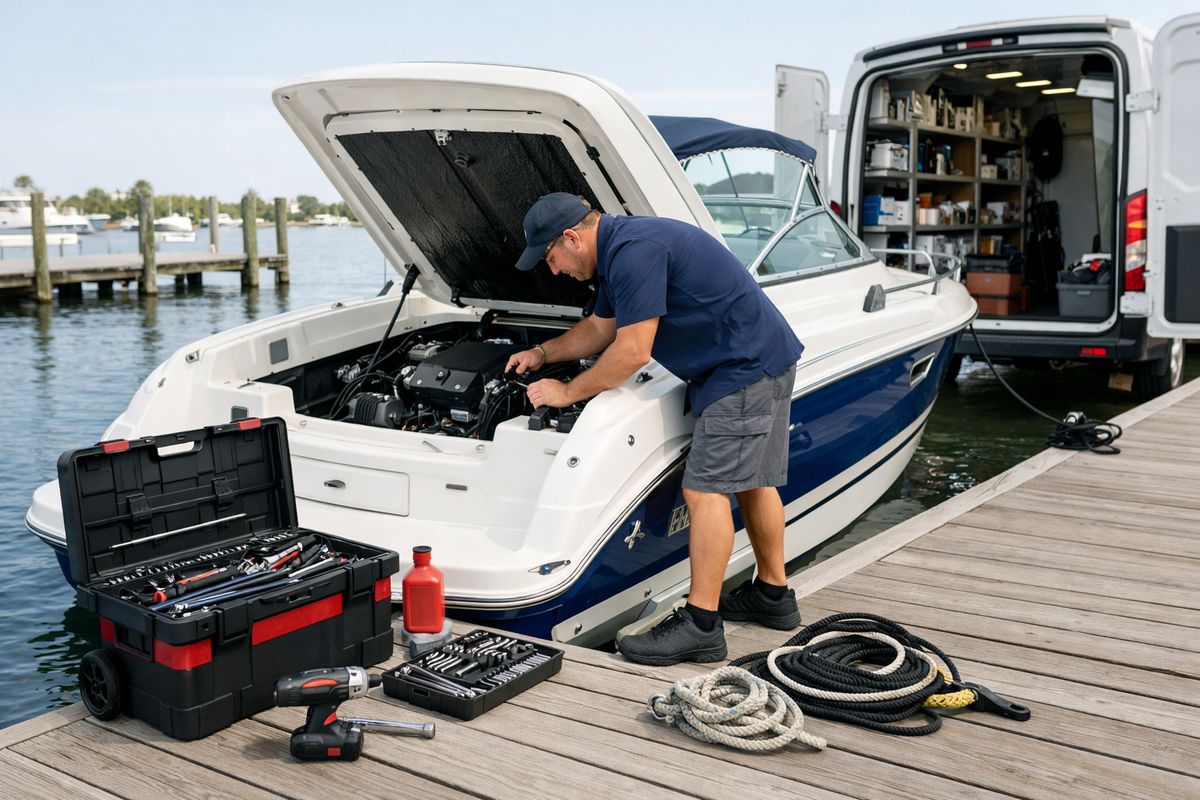
What a mobile marine mechanic actually does
A mobile marine mechanic is exactly what it sounds like: somebody who comes to your dock, lift, marina, driveway, or storage location to inspect, diagnose, maintain, or repair your boat instead of requiring a trip to a shop. For boats in the 25 to 55 foot range, that can mean anything from battery and charging problems to fuel issues, electrical troubleshooting, oil service, steering repairs, cooling problems, or engine diagnostics. For owners in Southwest Florida, this is often the most sensible option. Moving a boat takes time, coordination, and in some cases extra risk. A dockside visit can solve the problem faster and with less disruption, especially for issues that do not require a full yard environment. If you want a broader look at when on-site service actually makes sense, it helps to understand when mobile repair beats the yard. The catch is simple: when work happens where your boat sits, the repair risk comes to you.Why mobile service is so popular in Marco Island, Naples, and Bonita Springs
This part is easy to understand. You value your time. A mobile mechanic meets you where the boat already is, which cuts out transport headaches, launch schedules, and wasted days waiting for a yard to get around to your job. It also fits how boats are actually used here. If your plan is a Saturday run to Keewaydin and the issue pops up on Thursday, getting somebody to your slip is a lot more appealing than losing the weekend while your boat sits in line somewhere. That is one big reason mobile repair has become a preferred option, and some industry estimates say 72% of boat owners prefer mobile marine repair over hauling to a yard. For smaller and mid-size service calls, the speed is hard to beat. A battery problem, rough-running engine, or charging issue can often be diagnosed on site without turning your week upside down.Why insurance matters more with mobile work than shop work
When you drop a boat at a repair yard, the work happens inside somebody else’s controlled environment. When you hire mobile service, the job happens on your property, at your marina, or aboard your vessel, often inches away from fuel systems, shore power, battery banks, electronics, lifts, docks, and neighboring boats. That changes the risk. Mobile marine mechanic insurance is not just a back-office detail for the business doing the work. It affects your exposure too. If a tool gets dropped through a hatch, a helper slips on your dock, or oil ends up where it should not, the question stops being “Is this mechanic good?” and becomes “Who is paying for this?”Mistake #1: Hiring based on speed or price alone
Urgency makes people careless. You call three mechanics, one answers immediately, another says next week, and the cheapest quote lands in your inbox ten minutes later. In that moment, fast and cheap can feel like the same thing as efficient. Usually, it is not. The cheapest mechanic is often the most expensive mistake if something goes wrong. Low price can reflect honest efficiency, sure, but it can also mean missing process, thin documentation, weak parts sourcing, or insurance that barely covers anything useful.What low pricing can leave out
Cheap quotes often look clean because they leave out the messy stuff. No written scope. No real diagnostic time. No mention of what happens if the first fix does not solve the problem. No clarity on whether parts are OEM, quality aftermarket, or whatever happened to be available that morning. Sometimes the missing piece is even bigger: meaningful insurance. Mobile operators typically have lower overhead than shop-based businesses, with some estimates putting it at 30% lower overhead. That can absolutely create price advantages. But low overhead is not the same as low risk, and it definitely is not the same as proper coverage. A low number on an estimate only tells you what the first invoice might look like. It tells you nothing about the cost of a bad outcome.A better way to compare quotes
Compare the whole service, not just the invoice total. Response time matters, but so does the scope of work. Parts quality matters. Warranty terms matter. Whether your marina allows the mechanic on site matters. Proof of insurance matters. A better comparison sounds more like this: How quickly can the issue be diagnosed? What parts are likely involved? How will approval for extra work be handled? Is there any follow-up if the symptom returns? Can the mechanic legally and properly work where your boat is berthed? That kind of comparison takes a few extra minutes. It also filters out most bad hires before the first wrench comes out. If pricing is part of your decision, it helps to see what owners typically pay around here so one suspiciously cheap quote stands out for what it is.Mistake #2: Not verifying mobile marine mechanic insurance before work starts
This is the big one. “Asking if somebody is insured” is almost useless. Anybody can say yes. The only answer that matters is proof, and not vague proof. Actual documentation, current dates, and coverage that fits marine work performed on customer boats. Marine insurance is not getting looser or simpler. It is getting more specialized, and the broader market keeps expanding, with the marine insurance market projected to keep growing over the next several years. That matters because insurers are paying closer attention to exactly what work is being done, where it is being done, and how risk is being managed.The basic coverages you want to see
Start with general liability. In plain English, this is the policy that may respond if the mechanic causes accidental property damage or bodily injury during the job. If a service visit leads to damaged teak decking, a cracked hatch, or an injured person on the dock, this is one of the first places coverage may come into play. Commercial auto matters too. A mobile mechanic is driving a service vehicle loaded with parts, fluids, batteries, tools, and diagnostic equipment from site to site. Personal auto coverage is not the same thing. Then there is inland marine or tools and equipment coverage. The name sounds confusing, but it usually refers to mobile equipment and gear in transit or at temporary job sites. For a mobile mechanic, that is a real exposure, not some paperwork footnote. If helpers are involved, workers’ compensation should be on your radar. If somebody assisting with the job gets hurt on your dock or while boarding your vessel, you do not want that turning into a liability tangle that lands on your doorstep. And where fuel, oil, or bilge-related exposure exists, pollution or environmental liability deserves attention. Even a “small” job can create a not-small cleanup.What general liability does not automatically mean
Here is the mistake owners make: seeing “general liability” on a certificate and assuming that means the job is covered. Not necessarily. A generic business policy may not fully cover marine-specific operations, work aboard customer vessels, damage caused during service, or claims involving fuel, oil, and water contamination. In some cases, the policy exists, but the actual operations are described too vaguely. In others, marine work is partly excluded. In others, the policy limits are simply too low for the type of boats being serviced. Another coverage term worth knowing is care, custody, and control. It matters because the mechanic is physically working on property that belongs to you. In Florida marine contracting, care, custody and control is often treated as a key protection when customer vessels are being handled or serviced. So yes, ask for the certificate. But also make sure the coverage actually matches the work.Why pollution coverage matters around fuel, oil, and bilge areas
Fuel systems, used oil, filters, absorbents, bilges, and battery compartments are where “small incident” stories go to die. A little spill at the dock can become a cleanup bill, marina problem, or environmental headache very quickly. This is one reason insurers are scrutinizing marine risks more closely. Weather, regulation, and environmental exposure are pushing marine coverage into a more specialized direction, and 28 weather disasters in the United States in 2023 only sharpened that focus. Around boats, water does not make a mess less serious. It spreads it. If the service involves fuel lines, oil changes, filters, bilge pumps, tank access, or anything electrical near those systems, pollution coverage stops being optional in spirit, even if policy structure varies from one operator to the next.What to ask for without making it awkward
This does not need to sound confrontational. A simple, normal request works fine. Ask for a current certificate of insurance. Check the policy dates. Check the named insured, meaning the business name on the certificate matches the business showing up to do the work. Look at coverage types and limits. Ask plainly whether work on customer boats is included. If the mechanic will bring help, ask whether helpers are covered too. If the job touches fuel or oil, ask whether pollution-related incidents are covered. A professional operator will not act offended by this. A professional operator will expect it. And honestly, the tone of the response tells you a lot. Fast, clear, documented answers usually signal a business that has its act together. Evasive answers usually signal the opposite.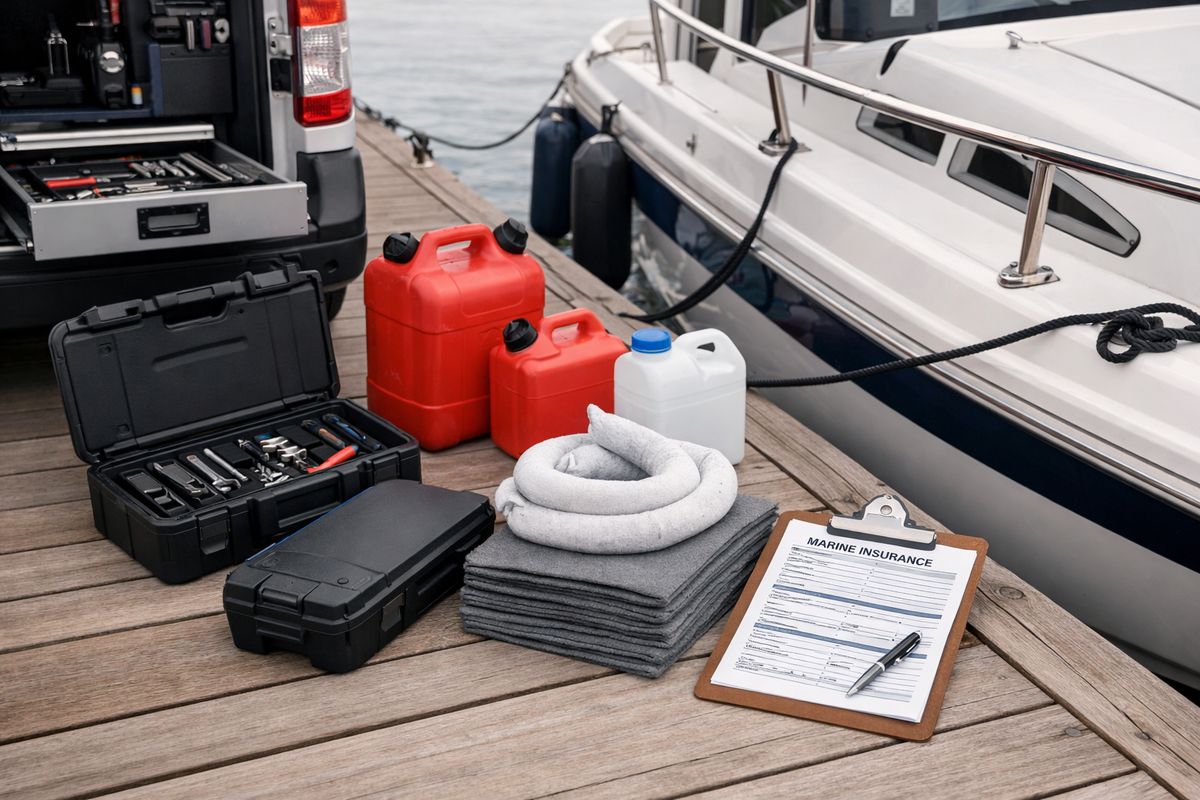
Mistake #3: Assuming boat damage will “just be covered somehow”
This is where owners get overly relaxed. It is easy to assume the mechanic’s insurance, the marina’s insurance, or your own boat policy will sort out any problem. Sometimes one of those policies does respond. But “some policy exists” is not the same thing as “this will be easy.”Whose policy responds if something gets damaged?
Say a mechanic scratches the gelcoat carrying equipment aboard. Or damages a display while tracing an electrical fault. Or cross-connects wiring and burns out a component. Or drops a metal part through an open hatch onto finished flooring below. Or causes an electrical event that creates smoke or fire risk. Those are not weird hypotheticals. Those are normal claim scenarios. The problem is fault, coverage language, and cause can all be disputed. Was it negligent work? A pre-existing condition? A bad part? Was the damage direct, indirect, or discovered later? Did it happen during diagnosis or after an owner-approved repair? The cleaner the facts, the easier the claim. The messier the facts, the longer the delay.How your own boat policy fits in
Your boat policy may help in some situations. But that does not mean you want it to. Using your own coverage can mean paying a deductible, waiting through a claims process, and dealing with the possibility of premium impact later. That is a lousy outcome if the real problem was that you hired an underinsured contractor because the appointment was available that afternoon. Your boat insurance is there to protect you. It should not become the backstop for somebody else’s weak business setup unless absolutely necessary.Why written documentation matters if there’s a claim
Documentation makes a boring job easier, and a disputed job survivable. Get a written service order. Take quick photos before work starts, especially around the area being serviced. Keep text or email approvals for added work. Save the parts list. Save the invoice. If a symptom changes after service, note when it changed and what you noticed. This is not paranoia. It is just clean recordkeeping. And it matters because claims and disputes are decided on details, not vibes. It also helps with diagnosis. If you are dealing with an intermittent issue, having a clear record of what was tested and when is incredibly useful, especially with hard-to-pin-down engine problems that can mimic each other.Mistake #4: Skipping the questions that reveal how the mechanic actually works
Insurance matters. Process matters too. A lot of owners focus on whether the mechanic sounds confident. Confidence is cheap. The better question is whether the work habits sound disciplined. Strong insurers care about training, safety, and documented controls for a reason. Those same things protect your boat.Ask where the work will happen and what the setup looks like
Some jobs are perfectly suited for on-site work. Some really are not. Ask exactly where the repair will happen and what the setup requires. Will shore power be used? Will batteries be isolated, meaning disconnected so the system cannot accidentally energize? Is fuel shutoff needed? Is the boat on a lift, in the water, or on a trailer? Is weather exposure a problem for the task at hand? Does the marina even allow this kind of repair dockside? The answers matter because the setting shapes the risk. A careful mechanic knows when a dockside repair is smart and when it should move to a controlled shop environment instead. If you want a clearer sense of what kinds of problems are realistic to handle on site, take a look at what usually gets fixed right at the dock.Ask about training, certifications, and marine-specific experience
Marine work is not automotive work with more water nearby. Boats pack electrical systems, corrosion exposure, fuel delivery issues, charging components, controls, electronics, and ventilation concerns into tight spaces that do not forgive guesswork. So ask what experience exists with your engine and systems. A mechanic familiar with Yamaha outboards is not automatically the right fit for a diesel inboard with layered electrical issues. General diesel or automotive experience can be useful, but it is not a substitute for marine-specific knowledge. This matters even more as boats get more electronic. Plenty of owners now spend more on electronics upgrades than engine repairs, which means one sloppy move can damage expensive equipment very quickly.Ask how parts, testing, and cleanup are handled
This sounds small. It is not. Ask where parts come from. Ask whether the repair will use OEM or aftermarket components and why. Ask how the repair will be tested, by dock test, sea trial, or system verification. Ask what happens to old fluids, filters, and waste materials. Ask whether the work area is left clean. Those answers reveal professionalism better than a polished logo ever will. Anybody can say “I’ve been doing this for years.” Not everybody can explain a clean testing process, a sensible parts plan, and proper disposal without sounding annoyed.