A boat breakdown service matters most when your plans fall apart at the worst possible moment, like losing power near Gordons Pass on a packed Saturday with current pushing you where you do not want to go. In that moment, “fast help” should mean more than somebody showing up with a tow line. It should mean getting you safe, figuring out what actually failed, and moving your day, or at least your boat, forward with as little hassle as possible.

When your boat quits, “fast help” should mean more than a tow
A lot of owners picture breakdown help as one thing: your boat stops, somebody drags it back, and that is the end of the story. But for a 25- to 55-foot boat in Southwest Florida, that view is too small. A real breakdown call is usually part safety response, part troubleshooting, part logistics. That matters because the first problem is not always the only problem. Loss of power can leave you drifting toward shoals, traffic, rocks, or pilings. A bad battery can look like an engine failure. A cooling issue can become engine damage if somebody keeps trying to restart and limp home. The best service gets the immediate situation under control first, then decides whether your boat can be fixed where it sits or needs to move. Here’s the thing: speed is useful, but useful speed is better. You do not just want the first hull to arrive. You want the right kind of help.What boat breakdown service usually covers
In plain English, boat breakdown service is fast-response help for a disabled or unsafe vessel. Depending on the provider, that can include on-water assistance, dockside diagnostics, temporary repairs, towing, transport to a yard, and coordination with a marina or repair shop. Coverage varies a lot. Some services are built mainly for towing. Some focus on mobile repairs at the dock. Some can do both, which is often the sweet spot if you value convenience and do not want to make three separate calls while your weekend disappears.On-water safety response
The first layer of help is about keeping a bad situation from getting worse. That means stabilizing the boat, checking whether you are drifting, deciding if you are in danger of grounding, collision, or flooding, and getting you into a safer position if needed. This is the “get you out of trouble first” part. It is not glamorous, but it is the part that protects your boat, your passengers, and everybody around you. Fast response matters because a disabled vessel can turn into a bigger emergency quickly, and machinery failure is already one of the top contributors in boating accidents.Dockside or on-site diagnostics
A lot of breakdown calls do not start with repairs. They start with diagnostics, which is just a plain way of saying figuring out what failed before anybody starts swapping parts or recommending a tow. That sounds obvious, but plenty of wasted time and money starts right here. Good troubleshooting can separate a dead battery bank from a charging problem, a fuel delivery issue from a clogged filter, or an overheating alarm from a raw-water blockage. If you have ever dealt with random starting trouble, you already know the value of a careful process like the one behind tracking down intermittent engine problems.Repair, tow, or transport to a yard
Once the issue is identified, the next step depends on the failure. Some problems can be handled on site. Think battery replacement, electrical cleanup, hose clamps, minor fuel issues, simple cooling problems, or getting a generator or engine started again at the dock. Other problems call for a tow to a marina, boatyard, or repair facility. If the boat is unsafe to run, or if the repair needs parts, haul-out, or more time than makes sense on the water, towing is not a failure. It is just the right next move.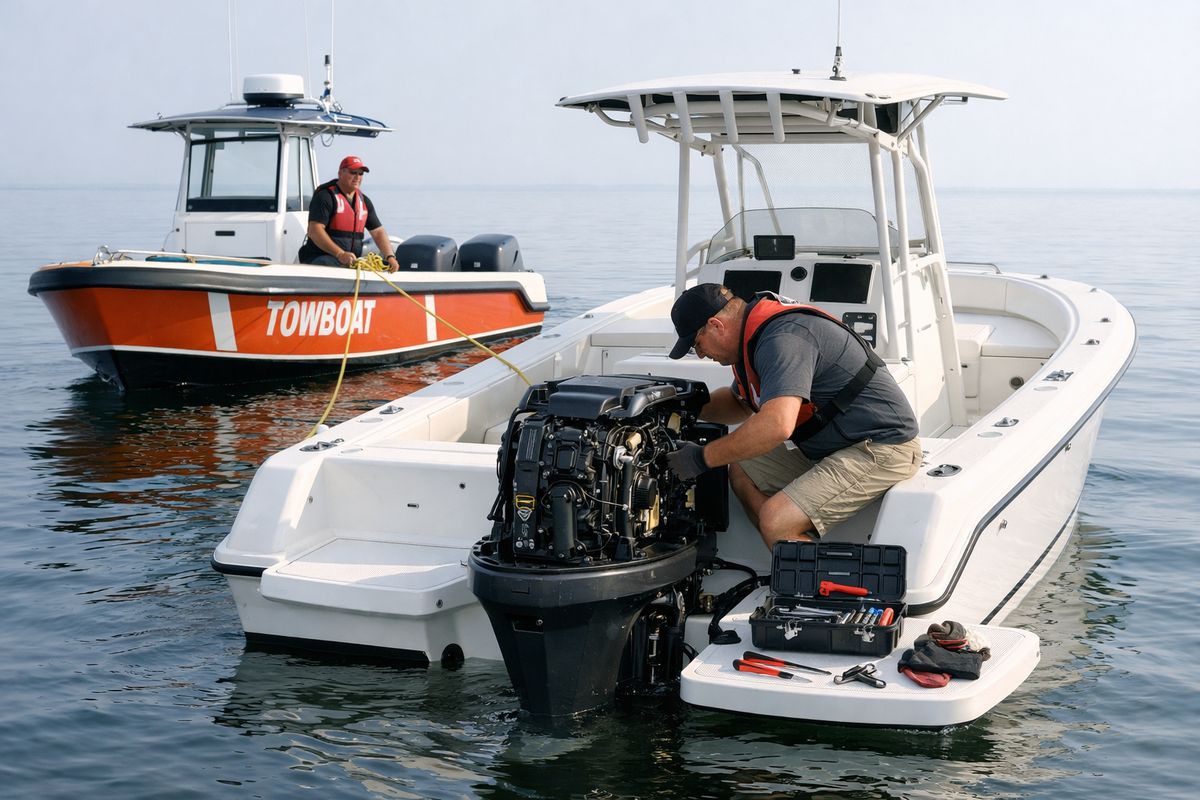
The difference between a mobile mechanic and an emergency towing crew
Buyers mix these two up all the time, and it creates delays. A mobile mechanic and an emergency towing crew solve different problems, even though there is some overlap. A towing crew is built to move a disabled vessel safely. A mobile mechanic is built to diagnose and repair mechanical, electrical, fuel, and systems issues where the boat sits. Some providers combine both. Many do not.When a mobile mechanic is the better fit
If your boat is secure at a dock, on a lift, at a marina, or behind your home, a mobile mechanic is usually the better first call for non-emergency failures. That includes no-start conditions, battery and charging issues, recurring alarms, rough running, generator faults, electrical gremlins, and plenty of dockside repairs that do not need haul-out. This is where convenience really shows up. Instead of moving a large boat just to learn what is wrong, you can often get a diagnosis where it already sits. If you want a better sense of what usually can be handled right there, it helps to see what gets fixed without leaving the dock.When towing or recovery is the right call
If you are offshore, drifting, blocking traffic, taking on water, stuck in rough conditions, or grounded in a way that could worsen, towing or recovery is the right first move. Same if the boat has no safe way to remain where it is. The catch is that delay changes the job. A manageable tow can turn into recovery. A soft grounding can turn into hull damage. A disabled boat can drift into a channel marker, another vessel, or shallow water. Fast marine response is meant to prevent exactly that, including collision risk, fuel spill risk, and secondary damage, which is why rapid towing response matters more than a catchy promise about “24/7 help.”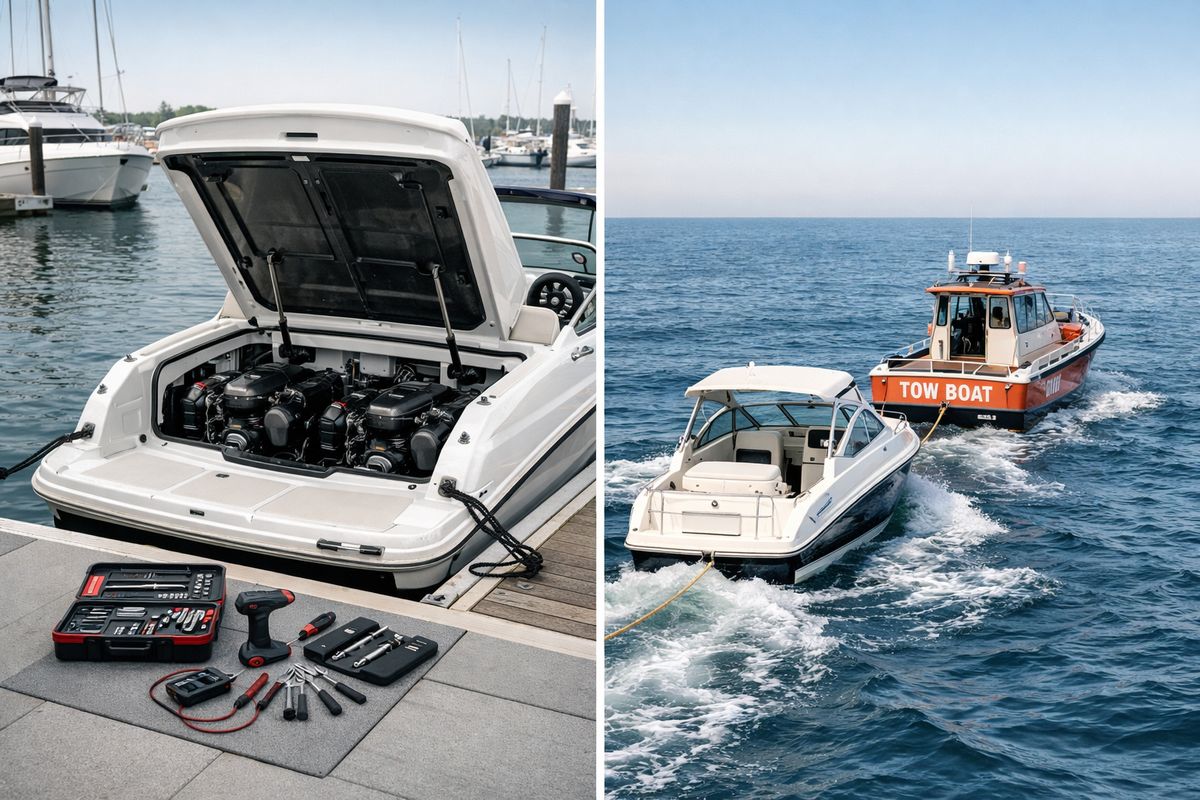
What “fast” actually looks like on the water
“Fast” sounds simple until you need it. On the water, it usually depends on where you are, the weather, traffic, access to your location, and what kind of crew is being dispatched. A realistic provider should talk clearly about both response and outcome. That is a much better sign than a vague guarantee that sounds great on the phone but falls apart once somebody learns you are in a crowded pass with weekend traffic and chop.Response time vs. resolution time
Response time is how quickly somebody gets to you. Resolution time is how long it takes to actually solve the problem. Those are not the same thing. A boat can be reached quickly and still need a tow, a part order, a haul-out, or more advanced diagnostics. Honestly, that is normal. The smart question is not just, “How fast can somebody get there?” It is, “What happens after arrival if the problem is bigger than a simple reset or battery swap?” If you are comparing providers, clarity on labor, dispatch, and follow-up matters just as much as understanding typical local service pricing.Why local coverage matters in Marco Island, Naples, and Bonita Springs
Local knowledge saves time in ways owners often underestimate. In this area, you are dealing with long idle zones, narrow channels, shallow spots, busy passes, seasonal traffic, and marinas spread across multiple communities. Moving a larger vessel from one end of the region to another is not like calling roadside assistance for a sedan. A crew that already knows the local marinas, common approach issues, and the difference between a simple dock call in Naples and a tougher pickup near Marco can make cleaner decisions faster. In crowded boating areas, local familiarity is not a nice extra. It is part of fast service.The most important things to check before you hire a breakdown service
This is the buyer’s guide part. Before you save a number in your phone, check the pieces that actually affect safety, convenience, and outcome.Service area and vessel fit
Start with basics. Does the provider regularly serve Marco Island, Naples, and Bonita Springs? Does the provider routinely handle your boat’s size, propulsion setup, and home dock situation? A company that is great with smaller outboard boats may not be built for a larger express cruiser, twin-engine setup, generator system, or a heavier vessel at a private lift. Ask the simple question behind all of this: do you handle boats like yours every week, or just once in a while?Mechanical capability on gas and diesel systems
For boats in the 25- to 55-foot range, “breakdown service” can mean a lot more than changing a battery. You may be dealing with diesel propulsion, gas engines, generators, fuel systems, cooling systems, pumps, electrical faults, and digital controls that need real diagnostics. Not every fast-response service can actually troubleshoot modern marine systems. Some can tow only. Some can do basic repairs only. A better option has enough technical range to diagnose before defaulting to transport. If you are sorting through local options, the same logic applies when comparing what mobile service should really handle.Communication and coordination
If your schedule is packed, communication becomes part of the service itself. Good breakdown support should include clear dispatch, realistic ETA windows, updates if conditions change, approval before major work, and coordination with marinas, lifts, yards, or storage facilities. You should not have to play middleman between the tow crew, the mechanic, the yard, and the dock office. That is where “cheap” service often gets expensive, because your time disappears into texts, gate codes, key access, and repeated explanations.Licensing, insurance, and recovery experience
This part is not exciting, but it protects you when the call gets messy. For towing, recovery, or anything close to salvage work, make sure the provider carries proper insurance and has real experience handling disabled boats in difficult conditions. That includes more than a business card and a truck. If you want a sharper sense of what to verify before letting anybody work on your boat, it is worth reviewing what to watch for before hiring mobile help. The point is simple: if something goes sideways during recovery or transport, you do not want surprises.What breakdown service does not always include
A lot of frustration comes from assumptions. “24/7 help” sounds like one complete package, but it usually is not.Parts availability and major component replacement
Fast response does not mean every part is sitting on a truck. Injectors, pumps, alternators, control modules, specialty sensors, and marine electronics may need to be sourced. Supply chain issues and pricing swings still affect marine repair, which is one reason parts timing can be unpredictable. So yes, somebody may reach you quickly and still need a follow-up visit. That is normal. The problem is only when nobody explains that upfront.Grounding recovery and salvage-level work
A light soft grounding is one kind of job. A hard grounding, hull breach, sinking risk, fuel spill risk, or recovery in rough conditions is a very different category with different equipment, liability, and pricing. That distinction matters because some breakdown services handle basic towing but not salvage-adjacent recovery. Once the boat is damaged, unstable, or environmentally risky, the job gets more specialized fast.Routine maintenance and long-term refit work
A breakdown call can reveal overdue maintenance, but breakdown service is not the same thing as a planned ownership program. Emergency response solves the problem in front of you. Routine maintenance prevents the next one. If you want fewer breakdown calls in the first place, the better long game is a predictable service routine for busy owners. That is how a boat starts feeling ready instead of needy.How pricing usually works, and where surprise costs show up
Most pricing lands in one of three buckets: membership-style towing coverage, hourly mechanic labor, or dispatch plus labor with travel and after-hours charges layered in.Membership, hourly service, and trip charges
Towing memberships can make sense if your main worry is on-water disablement and transport. Mobile mechanic service usually charges labor by the hour, often with a trip or dispatch fee. After-hours, weekend, holiday, and emergency response may cost more. None of that is strange. What matters is whether pricing is clear before work starts. You want to know what triggers extra charges, whether diagnostics are billed separately, and what happens if the job changes from dockside repair to tow or yard coordination.The hidden costs of slow or incomplete help
Cheap response is expensive if it burns a whole boating weekend or allows secondary damage. That is the direct claim to keep in mind. The hidden costs show up as repeat service calls, unnecessary towing, extra marina days, preventable overheating damage, battery damage from repeated failed starts, and a boat that sits half-fixed because nobody owned the next step. There is a reason marine repair keeps growing, with the repair market rising, and part of that demand comes from owners wanting faster, cleaner follow-through instead of patchwork service.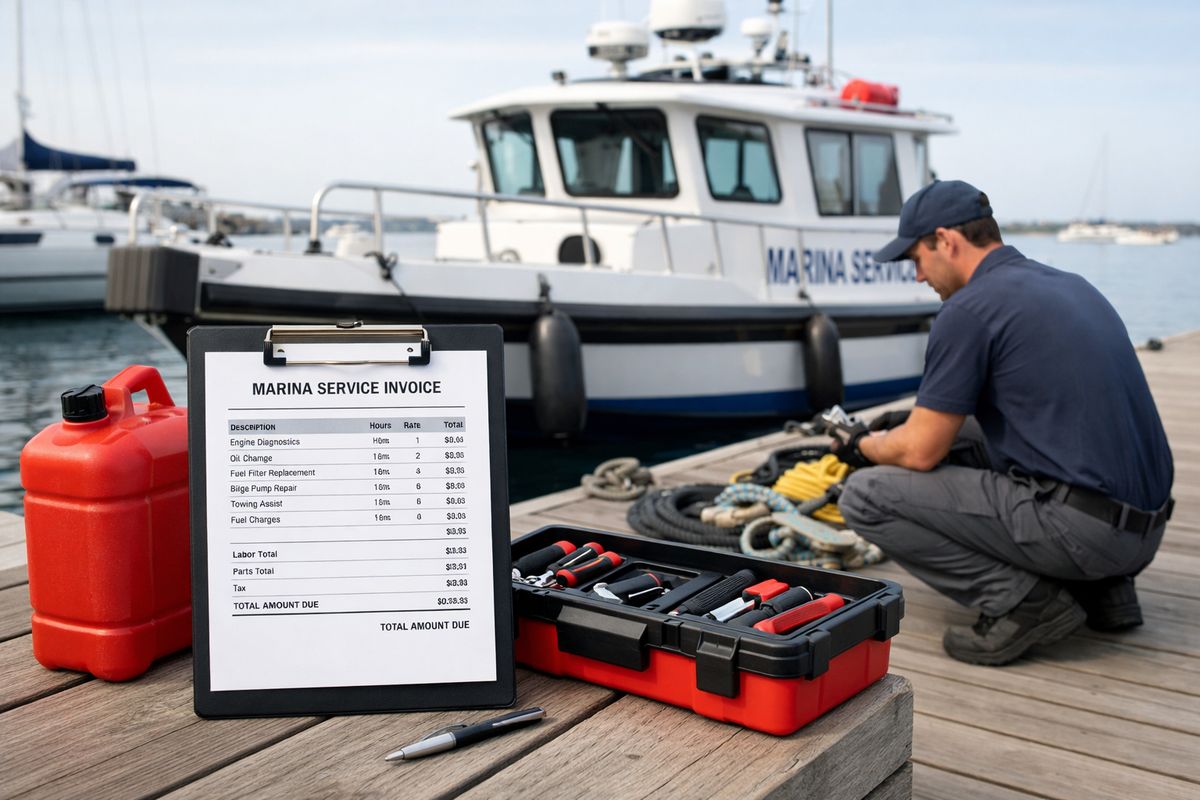
Common mistakes that make a breakdown worse
Most breakdowns are stressful enough without adding avoidable delays. A few common mistakes make a bad day longer than it needs to be.Calling the wrong kind of help first
If the boat is drifting into danger, the first call should be towing or emergency response, not a mechanic. If the boat is secure at the dock with a no-start issue, a tow may be pointless. Calling the wrong service first is like ordering an Uber when your car really needs a jump. You may still get somewhere eventually, but not efficiently.Waiting too long to ask for help
A lot of owners wait because the problem seems small. Maybe the engine alarm cleared. Maybe the battery came back after a reset. Maybe the boat started on the second try. But small marine problems can snowball fast. Ignoring a cooling issue on the water is a lot like ignoring a dashboard warning light halfway through a road trip to Miami. It rarely gets cheaper with miles.Choosing based on price alone
Lowest price sounds smart until communication is poor, diagnostics are weak, or nobody can finish the job after the first visit. Then you are paying twice, once in invoices and once in lost time. Value is not about buying the most expensive option. It is about choosing a service that can handle the full chain: dispatch, diagnosis, safe movement, repair path, and coordination.The best fit by use case: what to choose for your kind of boating
The right service depends on how you use your boat and how much ownership burden you want to carry yourself.For weekend cruising and family days on the water
If your boat is mostly for easy days out, sunset runs, lunch stops, and casual cruising, prioritize fast dispatch, strong local coverage, and a provider that can do basic troubleshooting plus towing. You want the boating version of a good concierge, not a phone tree and a mystery ETA. That setup reduces stress when something simple interrupts a day that was supposed to stay simple.For larger vessels kept at private docks or lifts
If your boat lives behind your home, on a lift, or at a private dock, prioritize dockside diagnostics, strong communication, and smooth coordination with yards or marinas when needed. Larger boats create more logistical friction, so convenience matters more. In that case, the best service is usually the one that can meet your boat where it sits, diagnose accurately, and manage the handoff if the repair grows beyond an on-site fix.For owners who want less ownership burden overall
If your main goal is to spend time on the boat, not managing it, breakdown response should be one piece of a broader support system. Pair emergency help with routine maintenance tracking, preventive service, and repair coordination. That is usually the point where ownership starts feeling lighter. Your boat stops being another item on the to-do list and starts feeling ready when you are.A simple checklist for choosing your breakdown service before you need it
Before your next run, save one reliable number and make sure the provider checks these boxes:- Covers Marco Island, Naples, and Bonita Springs
- Regularly handles 25- to 55-foot boats
- Works on your gas or diesel setup
- Offers towing, diagnostics, or both
- Gives clear dispatch and ETA updates
- Explains pricing before major work
- Can coordinate the follow-through, not just the first response