
A good-looking boat can fool you. Your gelcoat can shine at the dock in Naples, the cushions can look perfect, and you can still be one missed service item away from a dead battery, a hot engine alarm, or a ruined Saturday. That’s why a solid boat maintenance checklist matters: it keeps your boat safe, reliable, insurable, and ready to go without turning ownership into a part-time job.
A boat maintenance checklist is simply a repeatable list of inspections, service items, and records that keep your vessel running properly and help you catch small issues before they turn into expensive ones. For boats in the 25 to 55 foot range, that means a lot more than washing and waxing. It means paying attention to systems, corrosion, safety gear, and the boring paperwork that suddenly matters when something goes wrong.
Your boat maintenance checklist at a glance
If your boat spends time around Marco Island, Bonita Springs, or Naples Bay, the real problem usually isn’t one dramatic failure. It’s the slow stuff. Salt creep on terminals. A weak charger. A seacock that hasn’t been moved in months. A bilge pump that worked fine last season.
Here’s what you’ll want to keep up with:
- Pre-trip safety and systems checks
- Monthly dockside walkarounds
- Annual engine and haul-out service
- Seasonal storm and idle-period prep
- Records, surveys, and insurance items
- Lift or trailer checks, if applicable
Think of this as the never-miss list. Not a lecture, not a giant marina chore chart, just the practical items that save weekends and prevent ugly repair bills.
What “boat maintenance” actually includes
Boat maintenance includes inspections, service, repairs, corrosion prevention, safety checks, and documentation. The catch is complexity. Once your boat has multiple batteries, pumps, AC systems, electronics, plumbing, and bigger propulsion components, ignored little things stop being little.
That’s why the marine industry puts so much weight on routine preventive services. Maintenance is really risk management in boat shoes.
Why the checklist matters more in Southwest Florida
Southwest Florida is hard on boats. Salt air gets into everything. UV bakes vinyl, canvas, and seals. Humidity invites mildew. And a lot of recreational boats get used in short bursts, then sit for stretches at the dock or on a lift.
That pattern causes trouble fast. Batteries discharge, bottom growth builds, pumps stick, canvas stitching weakens, and corrosion gets a head start. If you want a deeper look at what changes in coastal ownership, this guide on what salt does to routine upkeep lays it out well.
The four things You’re really protecting
Your checklist is protecting four things: safety, reliability, compliance, and resale value.
Safety is obvious. In the U.S., there were 3,844 boating accidents in 2023, and machinery failure is one of the known contributors to accidents. Reliability matters because nobody wants to scrub a family day on the water because the boat won’t start. Compliance matters because expired extinguishers, bad wiring, or missing records can create insurance headaches. And resale value matters because buyers pay more for a boat with a clean maintenance story.
Skipped maintenance always costs more later. Always.
The never-miss pre-trip and monthly checklist
This is the fast, practical part. The goal is to catch obvious issues before they turn into a tow, a canceled run, or a service emergency.
Hull, bilge, and exterior walkaround
Start outside and keep it simple. Look for new cracks, blisters, loose cleats or rails, dock rash, and staining around the waterline that seems unusual. Check trim tabs, transducers, and anything mounted low on the transom.
Then check the bilge, the bottom compartment where water collects. A little water isn’t unusual. Dirty water, fuel smell, oil sheen, or more water than normal is different. That’s your clue that something changed.
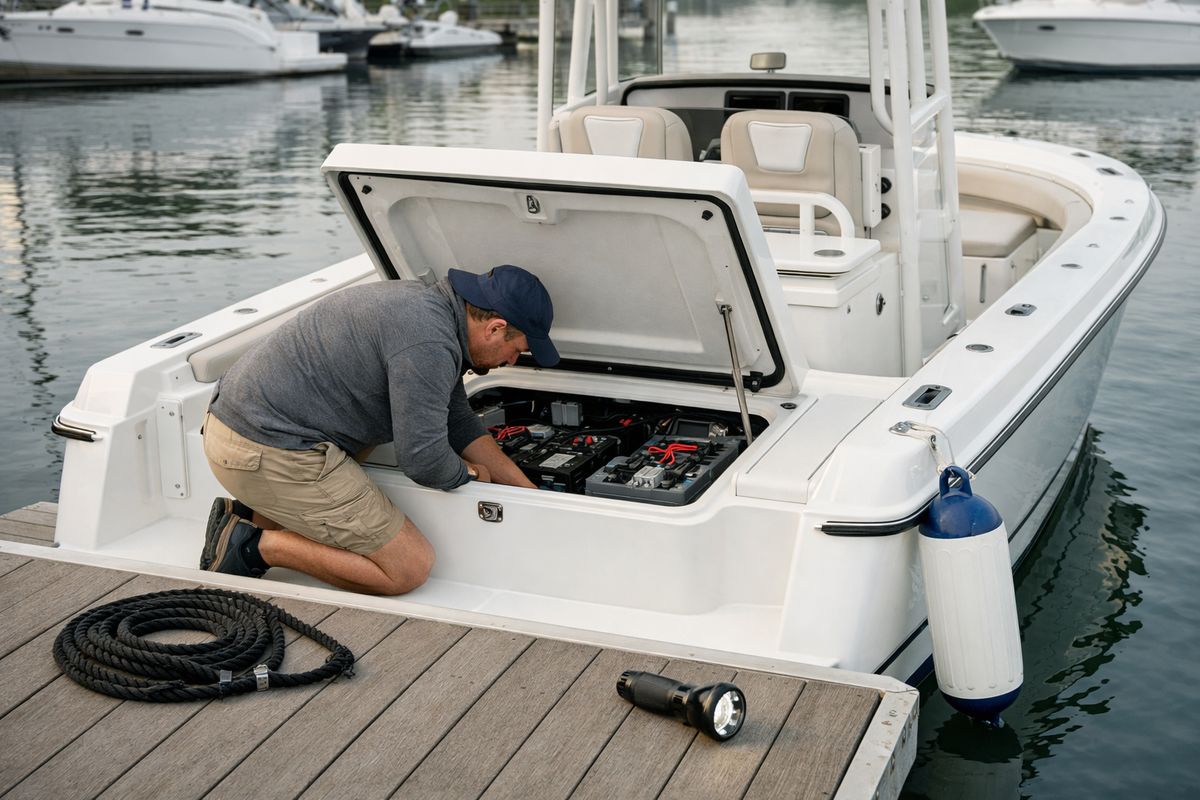
Batteries, power, and basic electronics
Look at battery charge status first. Then shore power connection, cord ends, panel breakers, and charger or inverter status. Corrosion on terminals or heat discoloration around plugs is bad news.
Power up your basics: nav lights, bilge pumps, alarms, VHF, chartplotter, and whatever electronics you rely on. Electrical issues are one of the most common boat trouble spots, and corroded connections and non-compliant wiring show up again and again in inspections.
Fluids, hoses, belts, and seacocks
Check engine oil, coolant, and transmission fluid where applicable. Look at belts for cracking or glazing. Squeeze accessible hoses and inspect clamps for rust or looseness. If something feels brittle, swollen, or crusty, don’t ignore it.
Move your seacocks too. A seacock is just the shutoff valve that controls water coming into the boat. If it’s frozen when you need it, that’s a problem at the worst possible time.
Safety gear you should check every time
Count life jackets. Check your throwable device, extinguishers, horn, flares, anchor setup, first aid kit, and VHF radio. Make sure nothing expired quietly in a locker.
This stuff gets overlooked because it isn’t glamorous. But missing or outdated gear can become a compliance issue in about five minutes. For a tighter pre-departure routine, keep a separate before-you-cast-off safety list handy.
The annual boat maintenance checklist owners should never skip
This is the deeper service work, usually tied to haul-out, seasonal scheduling, or annual engine intervals. If you skip this section, you’re gambling.
Engine and propulsion service
Get oil and filters changed on schedule. Replace impellers, check fuel-water separators, inspect spark plugs if your setup uses them, and have the cooling system looked over. Drives, shafts, couplers, and props all need attention too.
Small symptoms matter here. Hard starting, smoke, sluggish acceleration, or a little vibration can point to alignment or drivetrain issues that get expensive fast. Cosmetic condition won’t tell you much about machinery health, which is why service history and alignment checks matter so much.
Hull, bottom paint, and running gear
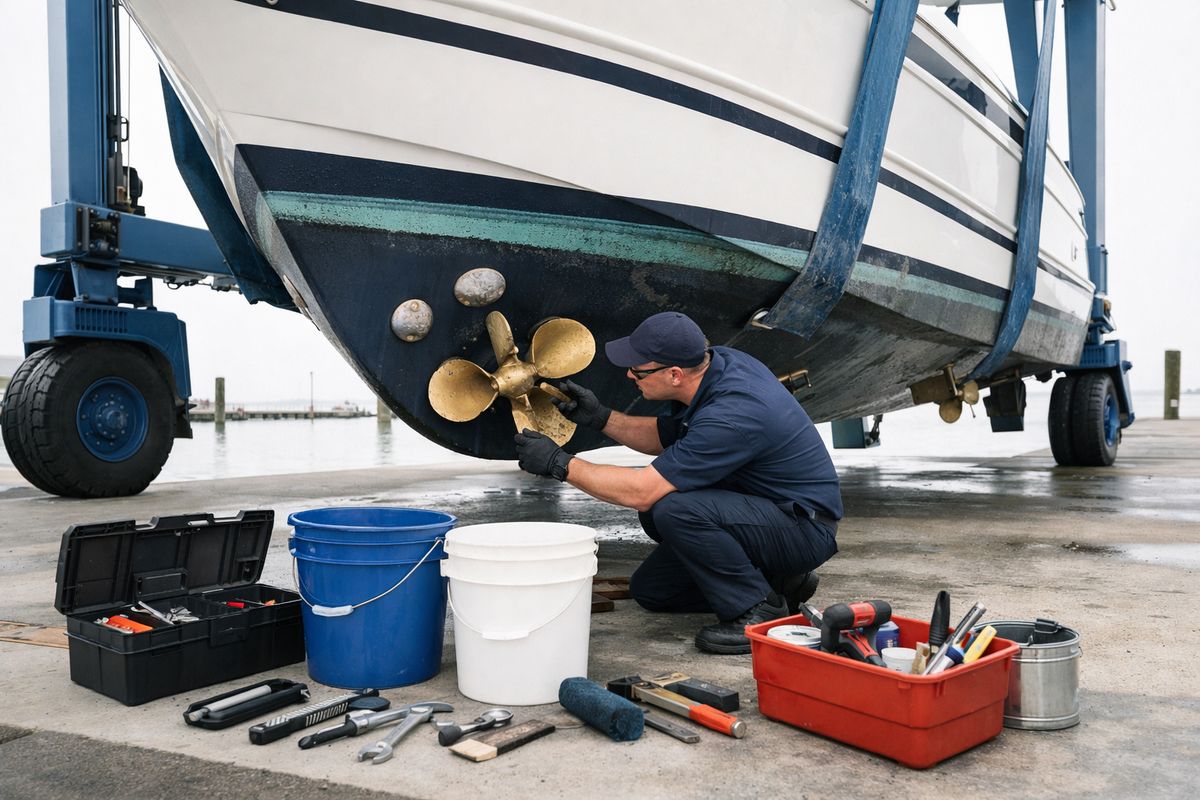
At least yearly, haul the boat and inspect the bottom properly. Look at bottom growth, blisters, through-hulls, trim tabs, shafts, rudders, propellers, and the condition of your bottom paint.
Don’t skip zincs, also called anodes. These are the metal pieces designed to corrode first so your more expensive underwater metals don’t. When anodes are gone, the rest of the hardware starts paying the price.
Electrical system and corrosion control
Have batteries load-tested, not just glanced at. Check the charger, inverter, shore power inlet, bonding system, wiring runs, breakers, and terminal condition. If your boat has add-on electronics from different eras, pay extra attention.
Here’s the thing: neglected electrical work can turn into survey findings, insurance requirements, or both. Corrosion control isn’t cosmetic. It’s protection for systems that are expensive to diagnose once they start acting weird.
Plumbing, head, air conditioning, and water systems
Freshwater pumps, water tanks, heads, holding tanks, AC strainers, sump boxes, and condensate drains all need regular attention. If your boat smells off, cycles oddly, or has mystery water in the cabin, start here.
These are the systems that ruin a day in the least glamorous way possible. Nobody forgets the first time the head stops working halfway to Keewaydin.
Canvas, upholstery, gelcoat, and interior care
Sun and moisture do real damage in Southwest Florida. Check canvas stitching, snaps, zippers, hatch seals, upholstery seams, vinyl condition, and signs of mildew inside lockers and cabins.
This isn’t just about appearances. Deferred cosmetic care becomes value loss. Worn canvas, dried seals, stained upholstery, and unchecked cabin moisture make a boat feel older than it is.
Seasonal and storage checklist for gulf coast boat owners
Southwest Florida ownership usually isn’t a simple winterize-then-launch routine. Your checklist needs to fit heat, storms, rainy season, and stretches when the boat sits.
Before peak boating season
Schedule service early, before the first big holiday weekend crush. Run the boat, test systems under load, refresh safety supplies, and update charts or software if needed.
If you want a simple way to prep before heavier use starts, this season-opening checklist is worth saving.
During long idle periods
When the boat sits, keep batteries managed, check dock lines and fenders, control cabin moisture, and inspect the boat at least monthly. Fuel stabilization may make sense if fuel will sit long enough.
Idle boats develop quiet problems. That’s the trick. Nothing seems wrong until it really is.
Storm prep and post-storm checks
Before weather rolls through, secure canvas, remove loose gear, confirm bilge pumps work, and review lines for chafe and proper placement. If your boat is on a lift, check that setup too.
After the storm, inspect for water intrusion, impact damage, electrical issues, and shifted gear. Don’t assume a boat looks fine because it’s still in the slip.
The overlooked items that turn into expensive problems
Most big bills start with things that were out of sight, easy to postpone, or annoying to document.
Maintenance records, registration, and insurance requirements
Keep service invoices, part replacements, registration, and policy documents organized. Good records support resale, warranty claims, and insurance renewals.
Insurers often want recent surveys, especially on older boats, and may require repairs within a deadline. If you’ve ever wondered what ownership really adds up to, records make that picture much clearer.
Professional surveys and specialist inspections
Book a surveyor or specialist after purchase, after a grounding, before some renewals, or anytime your boat has missing records or unexplained issues. A clean-looking boat can still hide wet core, wiring problems, bad repairs, or exhaust corrosion.
That matters even more as boats age and change hands multiple times. Looks lie. Systems tell the truth.
Trailer and lift checks, if your setup includes them
If your boat lives on a trailer or lift, don’t treat that gear like background scenery. Check tires, brakes, bearings, bunks, lights, straps, cables, motors, and switches.
A perfect boat on a neglected lift is still a risk.
When to DIY, when to delegate, and how to stay ahead
If you’ve got more money than time, the goal isn’t turning your weekends into a maintenance program. It’s knowing what deserves your eyes and what deserves a pro.
Tasks you can spot in five minutes
You can check battery status, shore power, bilge condition, obvious leaks, exterior damage, line condition, and safety gear count in just a few minutes at the dock. A quick photo log on your phone helps too. It gives you a baseline, and changes jump out faster.
Tasks worth handing to a pro
Engine service, electrical troubleshooting, corrosion diagnosis, haul-out work, bottom paint, shaft alignment, and survey-level inspections are worth outsourcing. The catch is timing. Handing it off early is smart. Handing it off after a breakdown is expensive.
A simple maintenance rhythm that actually works
Keep it easy: pre-trip checks before every run, a monthly dockside walkaround, annual service for major systems, and documented inspections after anything unusual like a grounding, lightning event, dead battery episode, or storm.
Try one thing: set a recurring monthly reminder, walk the boat for ten minutes, and take the same set of photos every time. That small habit catches more problems than good intentions ever will.
Frequently asked questions
How often should a boat maintenance checklist be used?
Use a short version before every trip, a fuller walkaround every month, and a deeper service checklist at least once a year. If your boat sits a lot, monthly checks matter even more.
What’s The most commonly missed item on a boat?
Electrical condition is high on the list. Corroded terminals, weak batteries, bad shore power connections, and charger problems often go unnoticed until the boat won’t start or systems begin failing.
Is washing the boat enough for regular maintenance?
No. Washing helps protect finishes, but actual maintenance also includes engine service, fluid checks, corrosion control, bilge inspection, safety gear checks, plumbing, and recordkeeping.
Do newer boats need less maintenance?
Usually less repair, not less attention. Newer boats still have batteries, pumps, electronics, seals, and underwater gear that need regular inspection, especially in saltwater.
When should you get a professional survey?
Get one after buying, after grounding or storm damage, before some insurance renewals, and anytime your boat has incomplete records or unexplained issues. Surveys are useful for maintenance planning, not just transactions.
Why do maintenance records matter so much?
Records help support resale value, insurance compliance, warranty claims, and smarter service planning. They also make it easier to spot recurring issues instead of treating every problem like a surprise.