Searching for mobile marine mechanics near me usually happens at the worst time: your boat is sitting in Marco Island or Naples, the weekend is close, and you do not have time to drag a 35-foot center console across town just to get a callback. The closest option is not always the right one, and knowing what to look for can save you money, downtime, and a whole lot of aggravation.
Why “Near Me” Isn’t Enough
Mobile service is about convenience, sure. But for a boat in the 25 to 55 foot range, it is also a trust decision. A mechanic coming to your dock, marina, or lift is working on a serious asset, not a lawn mower.
Here’s the thing: plenty of boat owners will go past the nearest option for somebody dependable. In fact, the average distance is 25 miles to a preferred repair shop, which tells you something useful. Proximity matters, but competence matters more.
What a Mobile Marine Mechanic Should Actually Handle
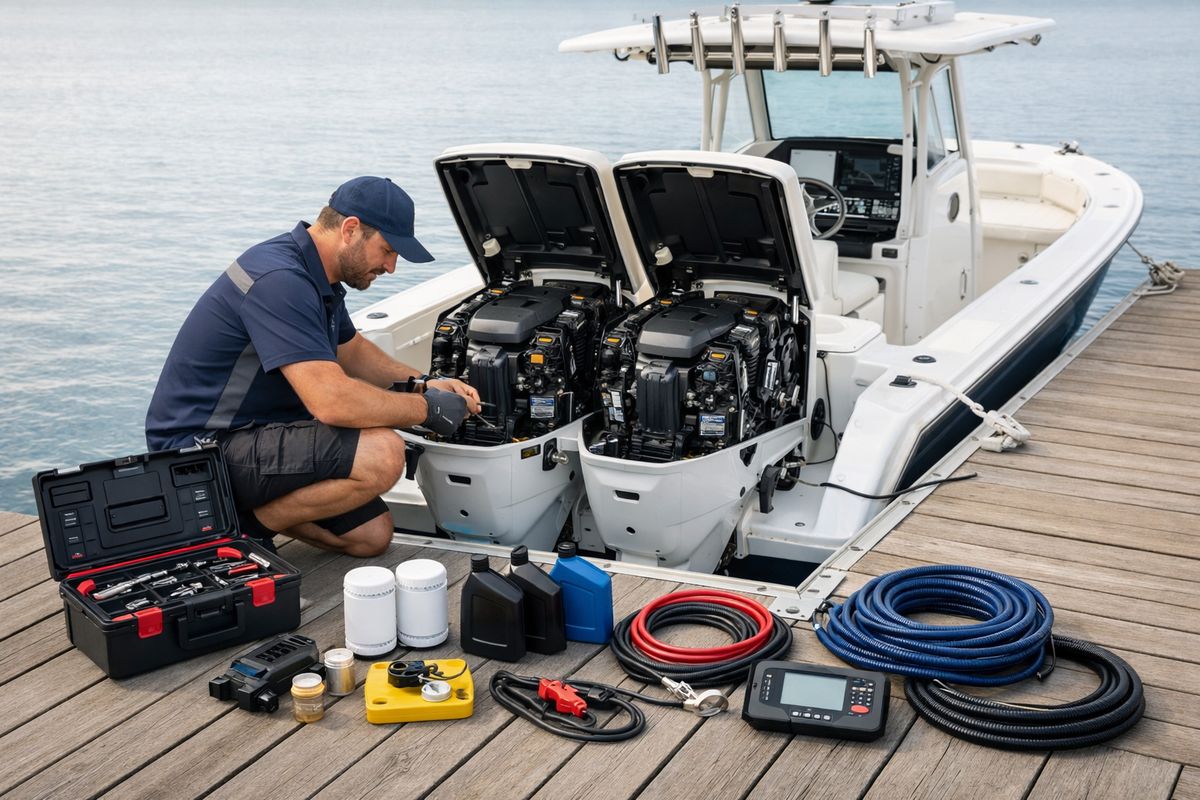
A good mobile marine mechanic should be set up for the kind of work that makes sense where your boat sits. That usually means routine maintenance, diagnostics, electrical issues, battery and charging problems, pumps, steering issues, outboard and sterndrive service, and seasonal checks.
If you want a better sense of what gets handled right at the dock, that line is usually pretty clear once you stop thinking of mobile service as “everything” and start thinking of it as “the right jobs, done efficiently.”
Jobs That Make Sense for Mobile Service
Dockside wins are the practical jobs that waste half a day if you have to trailer the boat. Oil and filter service, impellers, battery swaps, no-start troubleshooting, charging issues, electronics problems, minor fuel-system work, and preventative maintenance all fit well here.
This is especially true for busy owners who would rather have somebody meet the boat where it lives, whether that is a private dock in Naples Bay or a lift behind the house in Bonita Springs.
Jobs Better Left to a Shop or Yard
Some jobs are just not realistic for mobile service. Major fiberglass repair, structural issues, bottom work, big repowers, and anything needing haul-out equipment or shop access usually belongs in a yard.
That does not make mobile service less valuable. It just means a good mechanic should know where the line is and tell you plainly.
What to Look For Before You Book
This is where the decision gets real. Price matters, but skill, responsiveness, and transparency matter more.
Brand and Engine Experience
Your setup matters. Yamaha, Mercury, Suzuki, Volvo Penta, MerCruiser, diesel packages, twin engines, joystick controls, integrated electronics, all of that changes the job. Late-model boats often need brand-specific diagnostics, not guesswork.
If your boat has a modern engine package, ask about direct experience with that brand and system. Manufacturer-focused training is common in the trade, especially for technicians exposed to five major brands.
Diagnostic Ability and Electrical Know-How
Modern boats are floating systems. Engines, batteries, chargers, pumps, displays, sensors, and controls all talk to each other. CAN bus is just the onboard network that lets those systems communicate.
That is why electrical skill matters so much. If you are dealing with a gremlin that comes and goes, a real troubleshooter is worth the fee. For a deeper look at tracking down intermittent problems, focus on mechanics who use scan tools, test equipment, and actual process, not parts swapping.
Reviews, Reputation, and Local Word of Mouth
Online reviews still matter because 78% of consumers are influenced by them, but do not stop at the star rating. Read for patterns. Did the mechanic show up on time? Fix the actual issue? Communicate clearly? Return if something was still off?
Local word of mouth matters even more. Around Naples Bay, Marco Island, and Bonita marinas, dockmasters, captains, and service managers usually know who actually gets the job done.
Communication and Response Time
Fast, clear communication is often the best early signal. If getting booked feels confusing, the service experience probably will too.
Look for clear scheduling windows, update texts, photos when useful, and direct communication with the person doing the work. Playing telephone through an office slows everything down.
Licensing, Insurance, and Professional Basics
You are not looking for fancy paperwork. You are looking for basic professionalism: business licensing, insurance, written estimates, organized invoicing, and a clean service process.
If you want a good gut-check on what separates a real business from a risky side job, start there.
How to Compare Estimates Without Getting Tricked by the Lowest Price
The cheapest dockside quote often gets expensive later. That is just true.
A useful estimate should spell out labor rate, trip fee if there is one, diagnostic charge, parts markup, approval for extra work, and expected turnaround. Local pricing can vary, but a typical hourly labor range gives you a baseline.
Questions to Ask Before Saying Yes
Ask what the diagnostic fee includes, whether common parts are stocked, how labor and parts warranties work, whether service can be done where the boat sits, and how follow-up is handled if the issue comes back. A clean estimate is like a clean engine room, it tells you a lot before anything starts.
Best Choice by Use Case
Different problems call for different strengths. That is the trick.
For Routine Maintenance and Seasonal Service
For routine work, consistency beats drama. You want somebody reliable with scheduling discipline, service reminders, and ideally recurring care. Larger boats and busy owners often do better with an ongoing maintenance rhythm you can plan around.
For Electrical Problems, Electronics, and “Mystery” Issues
This is where diagnostic skill matters most. Random battery drain, electronics resets, charging faults, and engines that act up only sometimes need patience and proper testing. Guessing gets expensive fast.
For Pre-Purchase, Survey, or Post-Survey Repairs
Survey repair lists can pile up quickly, especially when closing dates are tight. Look for clear documentation, photo records, and somebody comfortable correcting findings without creating new confusion.
Common Mistakes That Waste Time and Money
The usual mistakes are predictable: choosing by proximity alone, waiting until a breakdown, assuming every mobile mechanic can handle every brand, skipping reviews, and never asking how follow-up works.
A little prep changes everything. Save the contact info for one vetted local mobile mechanic before your next weekend on the water gets derailed.
Frequently Asked Questions
How much does a mobile marine mechanic usually charge?
Most charge an hourly labor rate, often plus a trip fee and sometimes a diagnostic fee. The real number matters less than whether the estimate is clear.
Can a mobile mechanic work on a boat at a marina?
Usually yes, as long as the marina allows outside service and the work fits the location. It is smart to confirm access rules before booking.
Are mobile marine mechanics good for electrical problems?
Yes, if the mechanic has real diagnostic tools and electrical experience. That is one of the best uses for mobile service.
Can every repair be done dockside?
No. Routine maintenance, troubleshooting, and many system repairs can be. Structural work, haul-out jobs, and major repowers usually cannot.
How fast should a mechanic respond?
For non-emergency service, a clear reply within a reasonable business window is a good sign. Slow or vague communication early usually stays that way later.