
If you’ve ever gotten a marine service invoice and felt like the hourly rate was only half the story, you’re right. Marine mechanic rates around Marco Island, Naples, and Bonita Springs depend on where your boat sits, how complicated it is, and how fast you need it back on the water. This guide breaks down what you’re likely to pay locally, what actually drives the bill, and how to compare estimates without wasting a Saturday on callbacks.
What Marine Mechanic Rates Look Like Around Marco Island, Naples, and Bonita Springs
This is a local market question, not a national trivia answer. Southwest Florida boating is year-round, saltwater is hard on equipment, and good marine technicians stay busy.
The local hourly rate you’ll usually run into
In this area, a practical range for marine mechanic rates is about $110 to $165 per hour for standard shop labor, with mobile service often landing around $125 to $185 per hour. Specialty diagnostics and marine electronics work can climb into the $150 to $200-plus range, especially when the job involves networked electronics, intermittent faults, or high-end helm upgrades. That lines up with broader industry reporting that places hourly labor rates in roughly the same band.
Those numbers can feel high if you’ve seen wage data for technicians. National pay benchmarks are much lower. The median pay for motorboat mechanics and service technicians was $26.42 per hour in 2024, and ZipRecruiter’s current average is in the same general neighborhood. But your invoice is not a wage sheet. It includes overhead, insurance, service vehicles, tools, admin time, travel, scheduling gaps, and the cost of keeping a qualified tech available when your engine alarm starts screaming on a Thursday afternoon.
Why Southwest Florida pricing is different
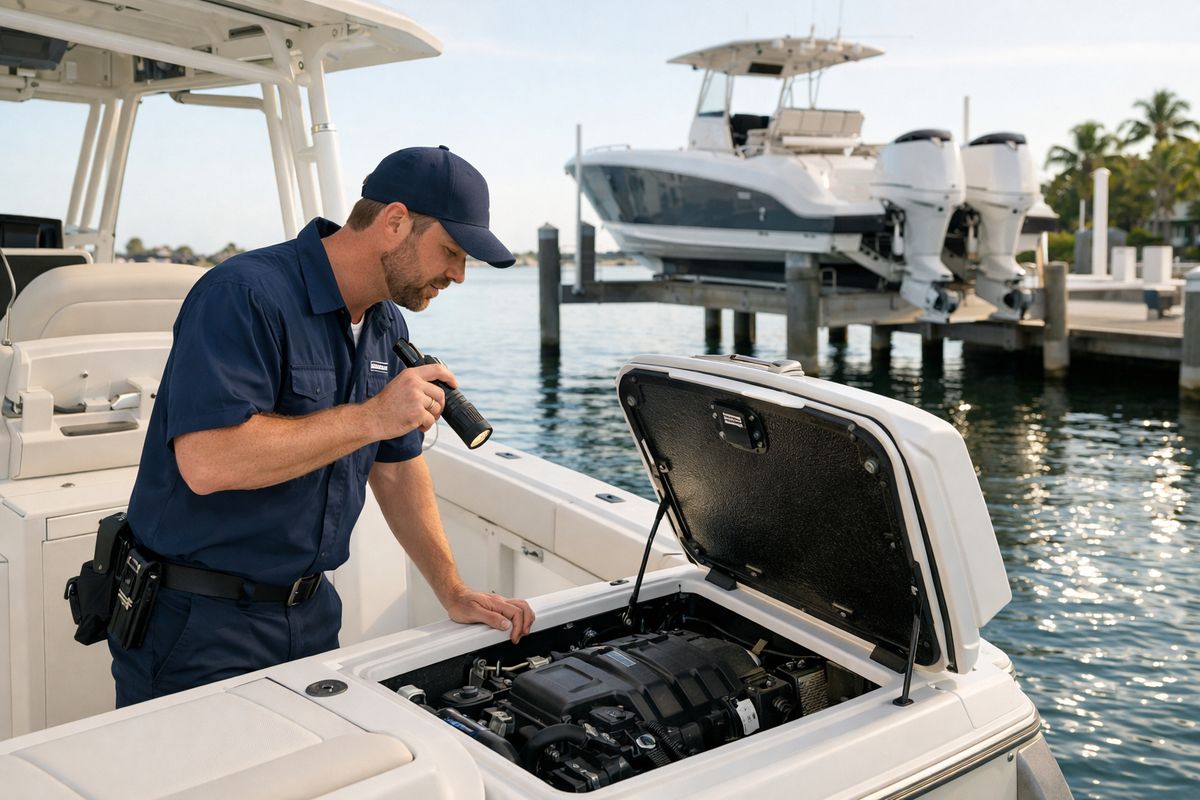
Southwest Florida tends to price above inland markets for a simple reason: demand stays strong and access is rarely easy. A dock call in Naples is not the same as pulling a pickup into a driveway in a landlocked town. If your boat is at Rose Marina, in a lift behind a waterfront home, or tied up out near Port of the Islands, the mechanic is billing for travel, coordination, and time spent working in a real marina environment.
Saltwater also changes the math. Corrosion, seized fasteners, wiring problems, and failed pumps show up more often, and saltwater maintenance costs run higher on average than freshwater service. Add in a wealthy ownership base, limited skilled labor, and a local boating culture that does not really turn off in winter, and higher local rates start to make sense fast.
What You’re Actually Paying For When You Hire a Marine Mechanic
The hourly number gets the attention, but the full invoice usually has several moving parts. And honestly, that’s where a lot of confusion starts.
Labor vs. diagnostic time
Labor is the time spent doing the repair. Diagnostic time is the time spent figuring out what is wrong before the repair starts. On a straightforward impeller swap, those can blur together. On an intermittent no-start, random alarm, fuel delivery issue, or battery drain, diagnostic time can be the bigger line item.
That does not mean you’re being billed for guessing. It means you’re paying for methodical troubleshooting. Tracing voltage drop through corroded connections, chasing a bad sender, or isolating a wiring fault takes time, especially on a larger boat. If you want a better feel for how that process works, it helps to understand how intermittent issues get traced before you compare quotes.
Mobile service fees, dock calls, and shop minimums
Mobile convenience usually costs more per hour, but it can still save money overall. A dockside call may include a trip fee, a one or two-hour minimum, and added charges for after-hours or holiday scheduling. That sounds annoying until you compare it with hauling the boat, arranging transport, losing a day to logistics, and waiting for the shop queue to open.
For busy owners, on-site service is often the better deal because it protects time, not just dollars. That’s especially true for routine work, battery issues, steering problems, and many repairs that can be handled at the dock without moving the boat at all.
Parts, markups, and why the final invoice jumps
Parts are where estimates drift. Marine-grade components cost more than automotive parts because they need to survive heat, vibration, moisture, and salt. Corrosion-resistant metals, sealed connectors, ignition-protected electrical components, and OEM sensors are expensive for a reason.
You’ll also see markup on parts, which covers sourcing, warranty handling, and the risk of stocking hard-to-find components. If a charger, trim relay, raw-water pump, or ECU sensor has to be sourced quickly in season, pricing may not look gentle. The cheapest part is often the one that fails twice.
The Biggest Factors That Change Your Quote
This is the part worth understanding, because it helps you spot normal pricing versus sloppy estimating.
Boat size and system complexity
A 25-foot single-outboard boat is one service universe. A 45-foot yacht with twin engines, a generator, air conditioning, multiple pumps, battery banks, and layered electronics is another. Bigger boats mean more systems, tighter access, and more time just reaching the failed component.
That’s why two owners can ask for “engine service” and get very different estimates. Even basic labor climbs when the mechanic has to remove panels, work around other equipment, or coordinate service across several onboard systems.
Type of work: routine service, repair, or upgrade
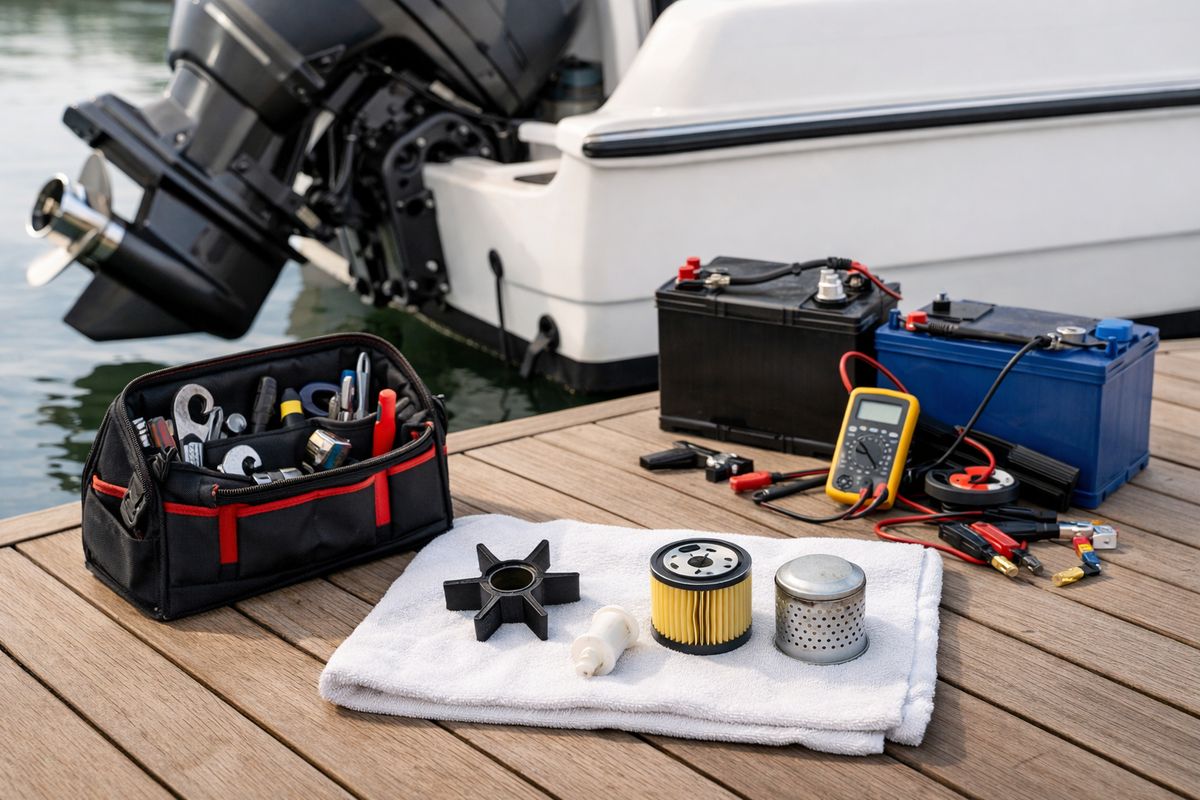
Routine maintenance is the most predictable category. Think 100-hour service, fluids, filters, zincs, impellers, and inspection work. Repairs are less predictable because the failed part may not be the only problem. Upgrades, like new electronics or charger replacements, often involve fabrication, rewiring, setup, and testing.
That difference matters. A quote for routine service should be tighter and easier to compare. A repair estimate often needs allowances. An upgrade estimate should spell out labor assumptions clearly, especially when hidden wiring or corroded connections may change the scope.
Certifications, specialization, and brand familiarity
Higher rates can be justified when the technician knows your engine platform well and has training in diesel systems, fuel injection, advanced diagnostics, or marine electronics. That skill usually buys you fewer wrong turns, faster troubleshooting, and less repeat downtime.
It also matters with newer systems. Digital throttles, integrated displays, smart chargers, and networked accessories are less forgiving than older standalone gear. If your boat has more than basic power and steering, paying for specialization can be cheaper than paying twice.
Timing, season, and urgency
The week before a holiday weekend is the wrong time to want bargain pricing. Same story before tarpon season, peak winter visitor months, or a planned offshore trip you’ve had on the calendar for weeks.
Rush work often carries a premium, if it can be scheduled at all. The catch is that local service demand stays strong because Florida controls over 18% of national boat repair revenue. In a market like this, “need it fixed by Friday” usually costs more.
Typical Marine Service Jobs and What They Tend to Cost
No honest mechanic can price every job from a distance, but local ranges are still useful.
Annual service and preventive maintenance
For a single outboard on a mid-size recreational boat, annual or 100-hour service often lands somewhere around $600 to $1,500 including labor and common consumables, depending on engine size and what’s due. Twin-engine setups can easily double that. Add impellers, extra filters, belt work, or corrosion cleanup, and the total rises quickly.
This is still cheaper than emergency failure. Preventive service is boring, but so is calling for a tow because an old impeller let go on a hot afternoon off Keewaydin.
Electrical and electronics work
Battery replacement, charger installs, bilge pump repairs, switch panel troubleshooting, GPS and fishfinder installs, and VHF issues often run from a few hundred dollars into the low thousands. Labor rates here trend higher because troubleshooting is slower and more specialized than simple mechanical swaps.
This category is growing fast too. A lot of owners now spend more on electronics than engine repair over time, which makes clean wiring, proper fusing, and accurate diagnostics worth paying for. If you’re sorting through scope and pricing, a good overview of what mobile service usually covers can keep expectations realistic.
Engine and drivetrain repairs
Outboard diagnostics may start with one to two hours of paid evaluation before parts are ordered. Lower-unit work, fuel-system cleaning, trim and tilt repair, starter or alternator replacement, diesel service, and generator repair can range from several hundred dollars to several thousand, largely based on access and parts.
Corrosion is the wildcard. A job that should take two hours can turn into five when fasteners seize, housings are fused in place, or old wiring crumbles during removal. That is normal in coastal service, not automatic overbilling.
How to Compare Estimates Without Wasting Your Time
A good estimate saves money before the work even starts.
What a clear estimate should include
You want to see the labor rate, estimated hours, diagnostic charge, parts allowance, travel or dock-call fees, and any haul-out coordination if needed. It should also say how overruns are handled. One of the best lines in any estimate is simple: call for approval before exceeding a stated dollar amount.
That single sentence keeps the job from drifting. It also tells you the shop has a process, which usually means fewer surprises.
Red flags in cheap or vague pricing
Unclear pricing usually gets expensive. If the estimate has no labor breakdown, skips diagnostics, promises unrealistically fast turnaround, or offers a suspiciously low hourly rate with no mention of trip charges, expect add-ons later.
Another warning sign is poor communication before the job even starts. If scheduling is messy and the scope stays vague, the invoice usually follows the same pattern. Before booking, it helps to know which hiring mistakes cost owners time, because price is only one way a job goes sideways.
Reviews, communication, and turnaround matter too
For busy owners, responsiveness matters almost as much as rate. Industry research shows 78% of consumers are influenced by online reviews when choosing a repair facility, and that makes sense. You care whether calls get returned, whether updates arrive when promised, and whether the boat is actually ready when you were told it would be.
Turnaround matters because downtime is the real hidden cost. A mechanic who communicates clearly and finishes on time can be worth much more than saving fifteen dollars an hour.
Smart Ways to Keep Marine Repair Costs From Snowballing
You do not need to become your own mechanic to keep costs under control.
Bundle service before peak season
If you already know you need annual service, a battery check, and a couple of small fixes, schedule it in one visit before winter and spring get crowded. Bundling work reduces repeat trip charges and helps catch small failures before they become “while you’re here” emergencies.
A written maintenance rhythm for weekend use is often enough to keep that from slipping.
Fix small issues before they turn into big ones
A weak battery, sticky float switch, small fuel seep, or crusty wiring connection is like a slow roof leak at home. Ignore it long enough and the cheap fix becomes drywall, insulation, paint, and a much worse mood.
Marine systems stack problems. One neglected issue puts stress on another, then another. That’s how modest invoices turn into painful ones.
Consider a maintenance plan if your boat is 40 feet or more
Larger boats usually benefit from recurring service. Boats over 40 feet are 3x more likely to have a standing service contract, and that tracks with real ownership life. More systems mean more opportunities for surprise failures, and predictable maintenance often pencils out better than constant reactive scheduling.
If your boat has a generator, air conditioning, multiple battery banks, and frequent use, a plan can make budgeting much calmer.
The Best Choice for Your Boat Depends on How You Use It
The right service setup depends less on the boat brochure and more on how your weekends actually work.
If you use your boat every weekend
Prioritize fast response, preventive scheduling, and mobile convenience. Downtime is the enemy. If you use the boat often, routine issues need to get handled before they interrupt the next run.
If you own a larger yacht or multiple onboard systems
Lean toward higher-skill shops or specialists who can handle diesel, generator, AC, electronics, and service coordination under one roof. On more complex boats, system integration matters more than the lowest labor rate.
If you just want fewer surprises
Get a baseline inspection and a written service plan before the next busy boating stretch. That one move does more to calm ownership than chasing the cheapest rate ever will.
Frequently Asked Questions
What is a normal hourly rate for a marine mechanic in Southwest Florida?
For Marco Island, Naples, and Bonita Springs, a realistic range is often about $110 to $165 per hour for shop work, with mobile and specialty diagnostic rates commonly higher.
Why is mobile marine service more expensive?
Mobile service includes travel, dock access, service vehicle costs, and minimum billing time. Even so, it can save money overall if it keeps you from hauling the boat or losing a full day to logistics.
Do marine mechanics charge for diagnostics even if nothing gets repaired?
Usually, yes. Diagnostic time covers the work required to find the issue, even if parts are not installed that day. That is especially common with electrical, fuel, and alarm-related problems.
Are larger boats always more expensive to service?
Almost always. Larger boats have more systems, tighter access, and more labor hours built into even ordinary jobs. Twin engines, generators, and onboard AC change the quote fast.
How can you keep repair bills more predictable?
Stay ahead on routine maintenance, bundle known issues into one visit, and ask for written estimates with approval limits for overruns. That keeps surprises smaller and easier to manage.